
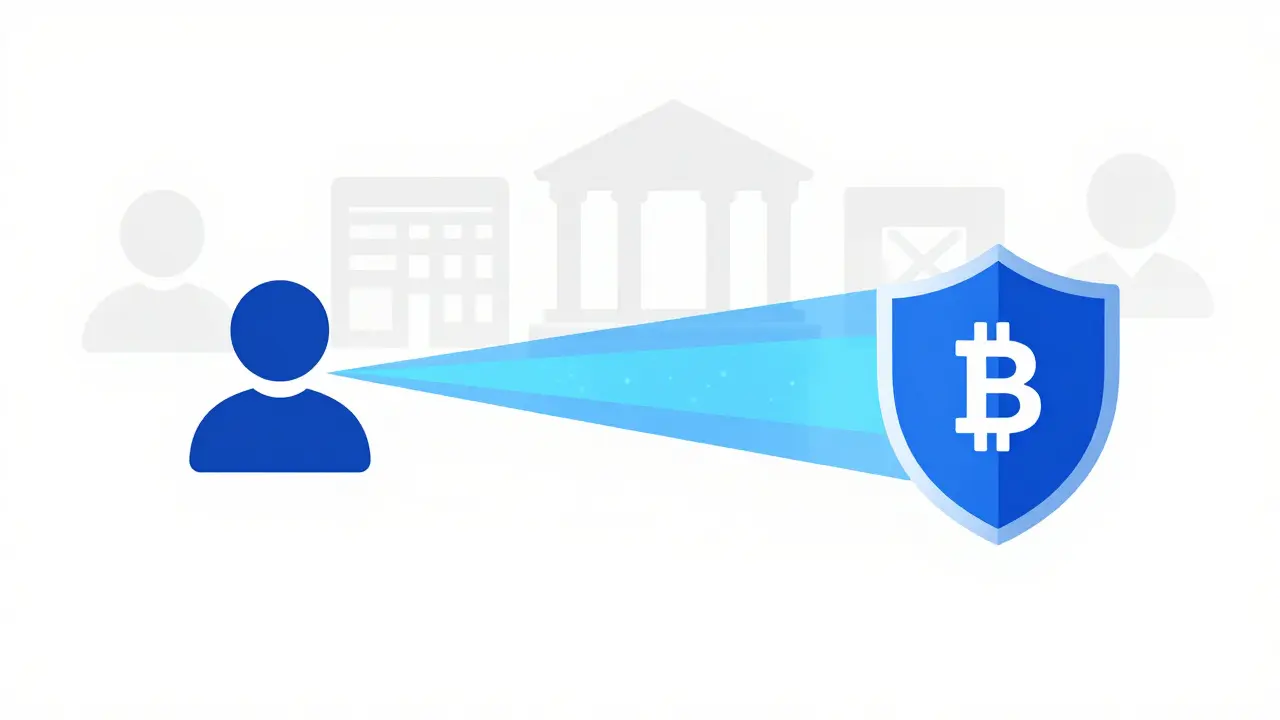
You’ve heard the horror stories. A major exchange collapses overnight. A payment processor freezes your account for no clear reason. Regulatory changes suddenly make your business model illegal in your home country. If you run a business that accepts cryptocurrency, these aren't just hypothetical risks-they are real threats to your revenue.
The solution isn't to stop accepting crypto. It’s to change how you handle it. By adopting a non-custodial payment architecture, you ensure that customer funds never sit in a third-party balance sheet. They flow directly from the buyer to your wallet. You hold the keys. You control the cash. And if a platform goes bankrupt or gets regulated out of existence, your money is already safe in your own pocket.
What Does "Non-Custodial" Actually Mean?
In traditional finance, when you swipe a credit card, the money doesn't hit your bank account instantly. It goes through a network of intermediaries-payment processors, acquiring banks, and clearing houses. These entities "custody" your funds for a period, often holding them for days or even weeks before settlement. During this time, they can reverse transactions, freeze accounts, or take a cut.
Cryptocurrency was designed to remove these middlemen. However, many early crypto payment gateways simply replicated the old banking model. They would collect crypto from customers, convert it to fiat (or hold it as crypto), and then send it to you later. This is a custodial model. The gateway holds your funds.
A non-custodial system works differently. It acts purely as a communication layer. It generates an invoice, tells the customer where to send the money, and notifies you when the blockchain confirms the transaction. At no point does the platform touch the private keys required to move the funds. The money settles directly into your self-custody wallet.
Is non-custodial safer than custodial?
Yes, regarding counterparty risk. In a custodial model, you rely on the platform's security and solvency. If they get hacked or go bankrupt, your funds are at risk. In a non-custodial model, only you have access to your funds via your private keys. However, you also bear full responsibility for securing those keys.
Why You Should Avoid Custodial Gateways
Let’s be blunt: trusting a third party with your money introduces unnecessary risk. Here are the three biggest dangers of custodial crypto processing:
- Counterparty Risk: If the payment provider suffers a hack, insolvency, or operational failure, your funds could be lost or frozen indefinitely. We've seen this happen repeatedly in the crypto industry.
- Censorship and Freezes: Custodial providers can decide to block transactions based on their own risk models, regulatory pressure, or arbitrary policy changes. You lose control over who can pay you.
- Privacy Erosion: To comply with regulations like KYC (Know Your Customer) and AML (Anti-Money Laundering), custodial gateways require extensive personal and business documentation. This creates a detailed profile of your financial activity that is vulnerable to data breaches or government subpoenas.
By moving to a non-custodial setup, you eliminate all three. You don't need to trust anyone. You don't worry about their policies. And you maintain complete privacy over your transaction history.
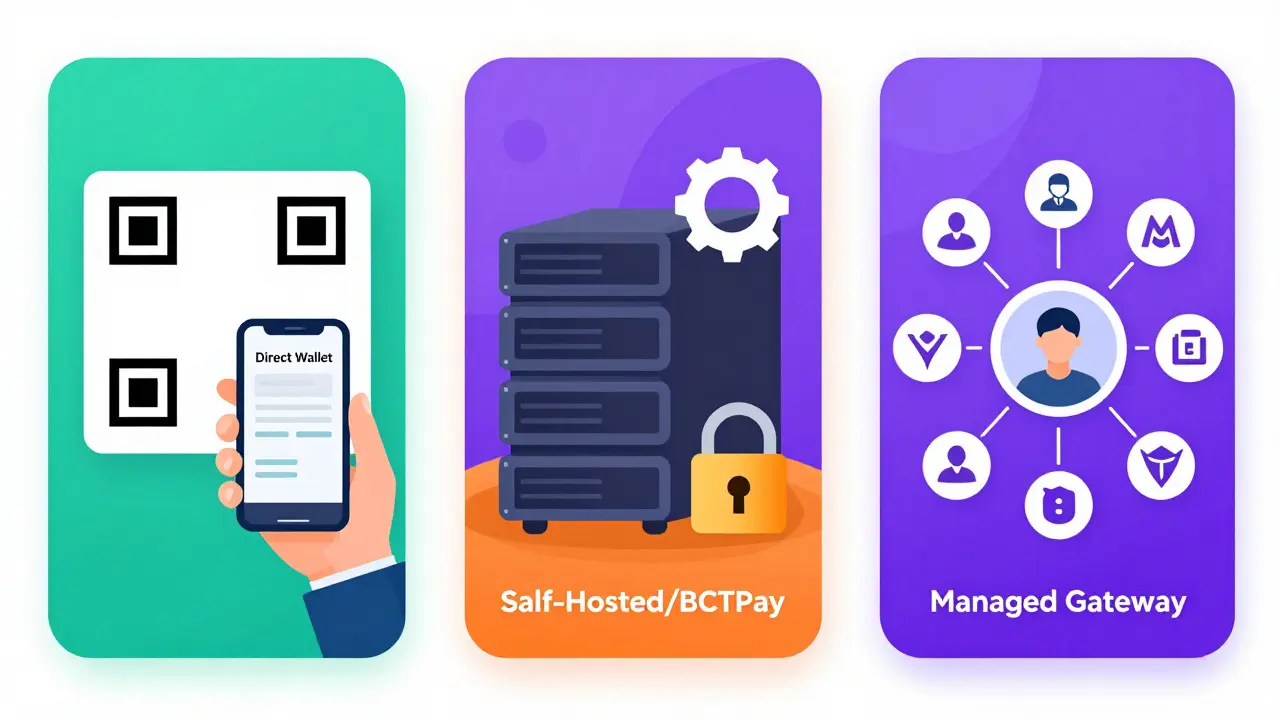
Three Ways to Accept Non-Custodial Payments
Implementing a non-custodial payment flow isn't one-size-fits-all. Depending on your technical skills and business needs, you can choose from three main approaches.
1. Direct Wallet Addresses (The DIY Approach)
This is the simplest method. You generate a Bitcoin or Ethereum address from your wallet app, share it with the customer (via email, QR code, or website), and wait for the payment. No software, no fees, no middleman.
Pros: Zero cost, maximum simplicity, total control.
Cons: No automation. You must manually check the blockchain to confirm payments. No invoicing, no accounting integration, and poor scalability. One mistake in copying an address can result in permanent loss of funds.
This works fine for occasional freelance gigs but fails for any serious e-commerce operation.
2. Self-Hosted Solutions (BTCPay Server)
BTCPay Server is an open-source, self-hosted Bitcoin payment processor. It runs on your own server, connects to your personal wallet, and provides professional features like invoice generation, plugin integrations for WooCommerce or Shopify, and automated payment confirmation.
Pros: Complete sovereignty, no monthly fees, supports Bitcoin and some other assets, highly customizable.
Cons: High technical barrier. You are responsible for server maintenance, security hardening, backups, and updates. It primarily supports Bitcoin, limiting your ability to accept other popular cryptocurrencies unless you configure additional nodes.
BTCPay is ideal for tech-savvy merchants who want maximum control and have the DevOps skills to maintain infrastructure.
3. Managed Non-Custodial Gateways
This is the sweet spot for most businesses. These platforms provide the convenience of a hosted service-easy APIs, dashboard management, multi-chain support-but settle funds directly to your wallet without ever taking custody.
Platforms like Blockonomics and PayRam offer this model. They handle the complexity of blockchain monitoring and invoice creation, while you retain ownership of your funds. Newer entrants like TxNod is a modern non-custodial gateway designed for solo founders and developers. focus on developer experience, allowing you to connect hardware wallets like Ledger or Trezor directly to derive payment addresses securely.
Pros: Professional features, multi-currency support, easy integration, no server maintenance.
Cons: Usually involves a subscription fee or small transaction fee. You still need to trust the platform's software integrity (though not with your funds).
| Feature | Direct Address | BTCPay Server | Managed Gateway (e.g., TxNod) |
|---|---|---|---|
| Custody of Funds | Merchant (100%) | Merchant (100%) | Merchant (100%) |
| Technical Skill Required | Low | High | Medium |
| Automation | None | Full | Full |
| Multi-Chain Support | Manual per chain | Limited (mostly BTC) | Extensive (7+ chains) |
| Cost | Free | Server Costs | Subscription/Fees |
Security Best Practices for Self-Custody
With great power comes great responsibility. When you hold your own funds, you are your own bank. Security is no longer someone else's problem-it's yours. Here’s how to stay safe:
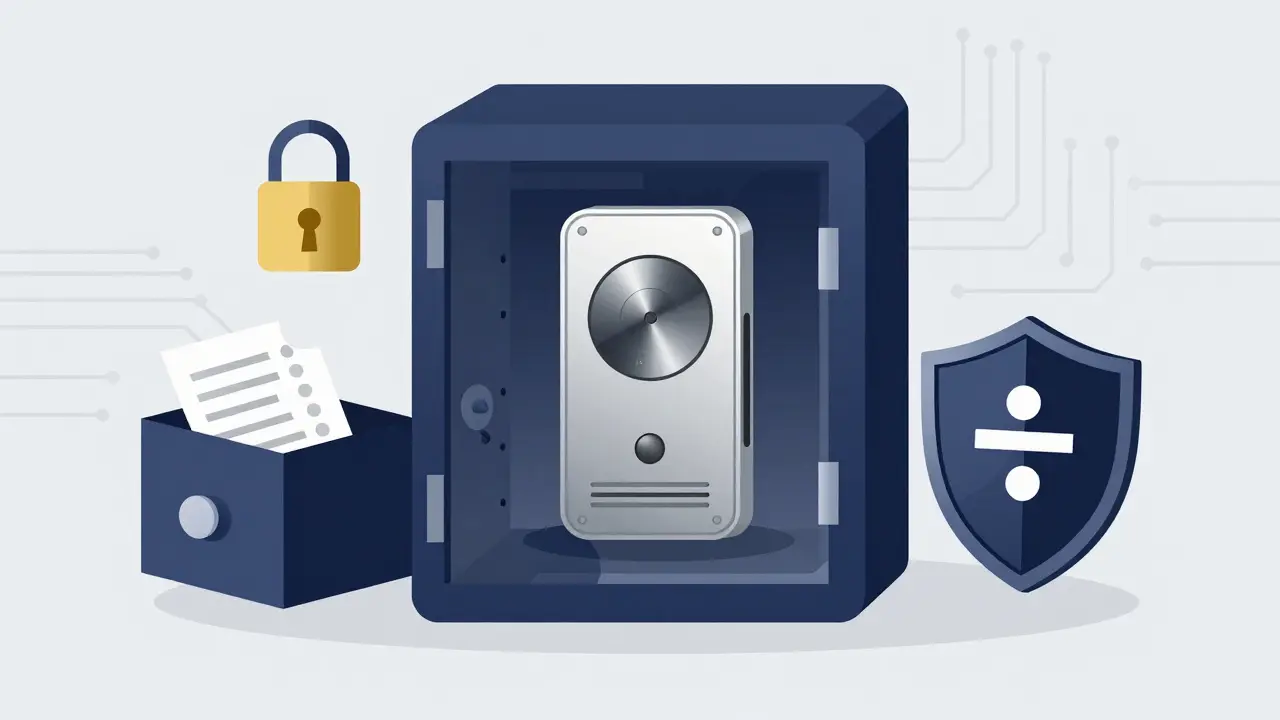
- Use Hardware Wallets: Never store significant amounts of crypto on a hot wallet (software on your computer or phone). Use a hardware device like a Ledger or Trezor. These devices keep your private keys offline, immune to online hacks.
- Separate Hot and Cold Storage: Use a small hot wallet for daily operations and immediate withdrawals. Transfer larger sums to cold storage regularly. This minimizes exposure if your computer is compromised.
- Verify Addresses Independently: When using a gateway, ensure it allows you to verify payment addresses. Some advanced systems, like TxNod, let you re-derive addresses locally from your extended public key (xpub) to ensure the gateway isn't trying to trick you into sending funds elsewhere.
- Back Up Your Seed Phrase: Write down your recovery phrase on paper or metal. Store it in a secure, physical location. Never digitize it. If you lose this, you lose your funds forever.
- Enable 2FA Everywhere: Use two-factor authentication on all accounts related to your crypto operations, including email and exchange accounts.
Choosing the Right Non-Custodial Gateway
If you decide against the manual route or self-hosting, selecting the right managed gateway is crucial. Look for these key features:
- True Non-Custodial Architecture: Ensure the platform explicitly states it does not hold private keys or fund balances. Settlement should be direct to your wallet.
- Multi-Chain Support: Don't limit yourself to Bitcoin. Customers may prefer to pay with Ethereum, USDT, or other assets. A good gateway supports multiple blockchains natively.
- Developer Experience: If you're building a custom site, look for clean APIs, SDKs, and webhooks. For example, TxNod offers a TypeScript SDK and MCP server integration, making it easier for developers to automate workflows.
- No KYC Requirements: Many non-custodial gateways do not require Know Your Customer verification, preserving your privacy. Check the terms carefully.
- Transparent Pricing: Avoid hidden fees. Some platforms charge high percentages per transaction. Others, like TxNod, operate on a flat subscription model with zero take-rate on volume, which can be more cost-effective for high-volume merchants.
Remember, the goal is to reduce friction for your customers while maximizing security and control for yourself. Test different platforms in sandbox mode before going live.
The Future of Merchant Sovereignty
The trend toward non-custodial payments is accelerating. As regulatory uncertainty grows and centralized platforms face increasing scrutiny, merchants are realizing that financial sovereignty is not just a crypto ideal-it's a practical business necessity.
Technological advancements are making self-custody easier. Hardware wallets are becoming more user-friendly. Gateways are offering better tools for address verification and automation. AI agents can now help manage invoicing and reconciliation, reducing the operational burden.
By adopting a non-custodial approach today, you future-proof your business. You build resilience against systemic failures. And you align your operations with the core principles of decentralization. Your money is yours. Keep it that way.
Can I accept stablecoins non-custodially?
Yes. Most modern non-custodial gateways support stablecoins like USDC and USDT across various chains (Ethereum, TRON, Polygon, etc.). The process is the same: the customer sends the stablecoin to an address derived from your public key, and it settles directly in your wallet.
What happens if a transaction is reverted?
Reputable non-custodial gateways monitor blockchain finality. If a transaction is included in a block that later gets orphaned or reverted, the system will detect this and update the invoice status accordingly. You won't be notified of a payment until it is sufficiently confirmed on the blockchain.
Do I need a registered company to use non-custodial gateways?
Many non-custodial gateways do not require a registered company. Since they do not hold your funds, they often bypass traditional banking compliance requirements. Platforms like TxNod allow individuals and solo founders to onboard without corporate documentation.
Is BTCPay Server free?
BTCPay Server itself is open-source and free to use. However, you must pay for your own server hosting, domain, and maintenance. There are no transaction fees charged by the software, but infrastructure costs apply.
How do I handle taxes with non-custodial payments?
You are responsible for tracking your own transactions. Most non-custodial gateways provide exportable records of invoices and payments. You can import these into accounting software or tax tools to calculate gains, losses, and income based on local regulations.