
Have you seen a listing for Bitcoin801010101018101010101018101010108 (ticker: BITCOIN) and wondered if it’s the next big thing in crypto? Or maybe you clicked a link, saw a price of $0, and felt confused? Here is the hard truth: this token does not exist as a legitimate asset. It is almost certainly a scam, a corrupted database entry, or a trap designed to steal your funds.
In the world of digital assets, names matter. But more importantly, verification matters. When you encounter a ticker symbol that looks like a string of random numbers attached to a famous brand name, your alarm bells should start ringing immediately. Let’s break down why this specific token is dangerous, how scammers use these tricks, and what you should actually be looking at if you want to invest in real Bitcoin (BTC).
The Red Flags: Why This Ticker Is Not Legitimate
If you search for Bitcoin801010101018101010101018101010108 on major tracking platforms like CoinMarketCap, CoinGecko, or Binance, you will find nothing-or worse, broken links showing a price of $0. Legitimate cryptocurrencies have transparent histories, active development teams, and verifiable blockchain addresses. This token has none of those things.
Consider the name itself. Real project names are usually concise and memorable. A string like "801010101018101010101018101010108" is not a name; it looks like a glitched computer code or a randomly generated hash. Scammers often create tokens with long, confusing names to bypass spam filters or to trick automated bots into indexing them. The goal is to make you think you’ve found something obscure and undervalued before the market catches on. In reality, there is no market because there is no product.
Furthermore, the ticker symbol "BITCOIN" is misleading. While it sounds authoritative, legitimate Bitcoin uses the ticker BTC. Using the full word "BITCOIN" as a ticker for a different, unrelated token is a classic impersonation tactic. It relies on confusion. If you accidentally send real BTC to an address associated with this fake token, you could lose everything. There is no customer support to call, no reverse transaction button, and no legal recourse.
What Is Real Bitcoin (BTC)?
To understand why this fake token is so dangerous, you need to know what the real thing looks like. Bitcoin (BTC) was created in 2009 by an anonymous entity known as Satoshi Nakamoto. It operates on a decentralized network using Proof-of-Work consensus and the SHA-256 hashing algorithm. As of May 2026, Bitcoin trades on every major exchange globally, including Coinbase, Kraken, and Binance.
The real Bitcoin has a fixed supply cap of 21 million coins. Approximately 19.95 million are already in circulation. Its value is determined by global market demand, institutional adoption, and macroeconomic factors. In early 2026, Bitcoin traded between $81,000 and $94,000 USD, reflecting its status as a store of value and a digital commodity. It has a massive developer community, open-source code repositories on GitHub, and clear governance processes. None of these attributes apply to the mysterious "Bitcoin801..." token.
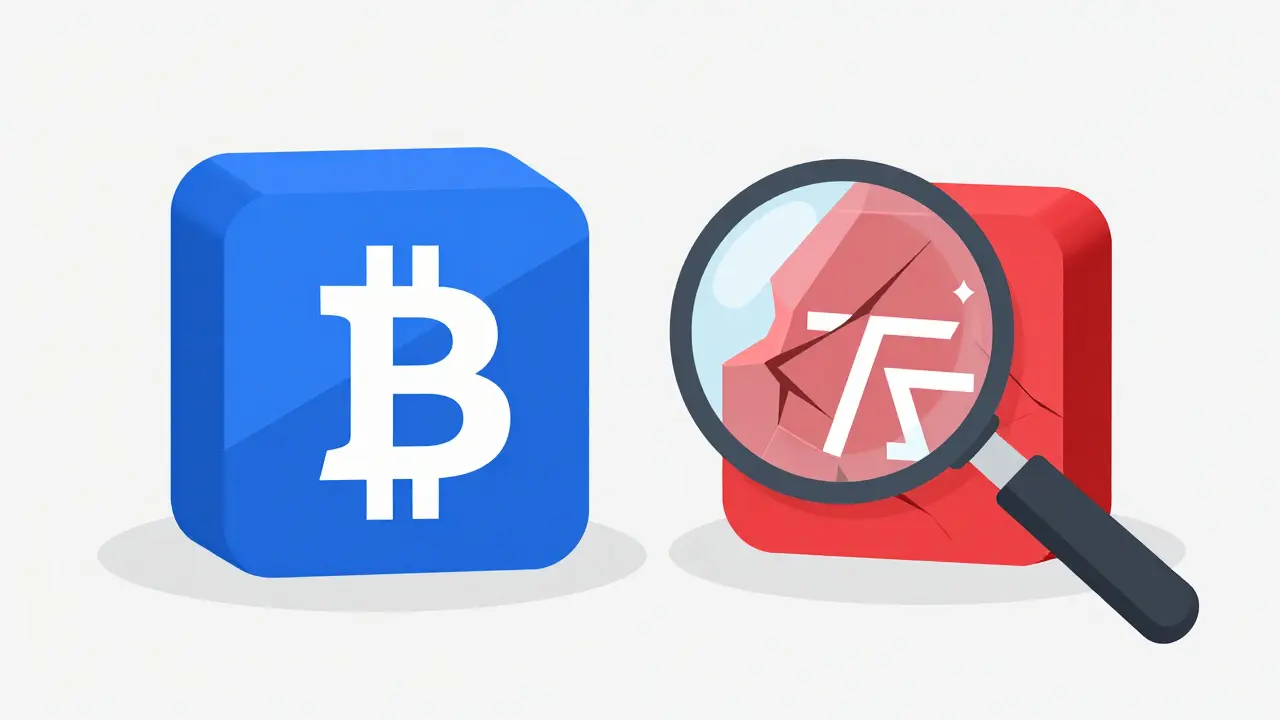
How Impersonation Scams Work
Scammers don’t just guess names; they study psychology. They know that new investors often fear missing out (FOMO) on the next big opportunity. By attaching the word "Bitcoin" to a long, technical-looking string, they create an illusion of legitimacy. You might think, "This must be a new upgrade or a hidden gem." But here is the mechanic behind the fraud:
- Honeypot Tokens: These are smart contracts coded so you can buy the token but never sell it. The scammer drains liquidity from the pool, leaving you with worthless tokens.
- Rug Pulls: The creators pump up the price through fake social media hype, then sell all their holdings at once, crashing the price to zero.
- Phishing Links: Malicious URLs may look like official exchange pages but lead to sites that steal your private keys or seed phrases when you try to connect your wallet.
The absence of this token on reputable aggregators like CoinCodex or CryptoCompare is not an oversight. It is a confirmation. These platforms vet thousands of tokens daily. If a token has no volume, no verified contract, and no team, it gets flagged or ignored entirely.
Verification Checklist: How to Spot Fake Tokens
You do not need to be a programmer to protect yourself. Use this simple checklist before interacting with any unfamiliar cryptocurrency:
- Check Major Aggregators: Search the ticker on CoinMarketCap and CoinGecko. If it’s not there, or if the data looks suspicious (e.g., $0 price, no market cap), walk away.
- Verify the Contract Address: Every token on networks like Ethereum or Binance Smart Chain has a unique contract address. Check this address on Etherscan or BscScan. Look for warnings about scams or honeypots.
- Look for Official Sources: Does the project have a whitepaper? A GitHub repository with recent commits? A verified Twitter account with real engagement? If the only source is a shady Telegram group or an anonymous blog post, it is likely a scam.
- Analyze the Name: Be skeptical of names that mimic established brands with added numbers or slight spelling changes. "Bitc0in," "BTC-Pro," or long numerical strings are common red flags.
- Check Liquidity: Low liquidity means you cannot sell your tokens easily. Scammers often launch tokens with minimal liquidity to facilitate rug pulls.
The Risks of Interacting with Fake Assets
Why take the risk? The consequences of engaging with a fake token like Bitcoin801010101018101010101018101010108 can be severe. Beyond losing the money you invest, you expose your wallet to security threats. Some malicious tokens require you to approve unlimited spending limits on your main assets (like ETH or USDT). Once approved, the scammer can drain your entire balance instantly.
Regulatory bodies like the SEC (Securities and Exchange Commission) and CFTC (Commodity Futures Trading Commission) frequently issue warnings about such impersonation schemes. They emphasize that investors are responsible for due diligence. No one will refund your lost funds if you fall for a fake listing.
| Feature | Real Bitcoin (BTC) | Fake Token (e.g., Bitcoin801...) |
|---|---|---|
| Ticker Symbol | BTC | BITCOIN (or similar variations) |
| Launch Date | January 2009 | Unknown / Recently Created |
| Market Presence | Listed on all major exchanges | Absent from major trackers |
| Development Team | Open-source, global community | Anonymous or non-existent |
| Price Stability | High volatility but real value | $0 or manipulated |
| Security | Proof-of-Work, SHA-256 | Often vulnerable smart contracts |
What Should You Do Instead?
If you are interested in cryptocurrency, focus on assets with proven track records. Bitcoin remains the gold standard for decentralization and security. For those seeking higher growth potential, research established altcoins with clear utility, such as Ethereum (ETH) or Solana (SOL). Always start with small amounts, use hardware wallets for storage, and never share your seed phrase with anyone.
Educate yourself on blockchain basics. Understand how wallets work, how transactions are confirmed, and why decentralization matters. The more you know, the harder it is for scammers to trick you. Ignore DMs from strangers promising guaranteed returns. Avoid clicking on unsolicited links. And remember: if a deal looks too good to be true, or if a name looks too weird to be real, it probably is.
Is Bitcoin801010101018101010101018101010108 a real cryptocurrency?
No. This token does not appear on any major cryptocurrency tracking platforms like CoinMarketCap or CoinGecko. It has no verifiable market data, development team, or legitimate exchange listings. It is widely considered a scam or a corrupted entry.
Why does the fake token use the name "Bitcoin"?
Scammers use the name "Bitcoin" to confuse investors and borrow credibility from the original, successful cryptocurrency. This is a form of impersonation fraud designed to trick users into buying worthless tokens.
Can I recover my funds if I bought this fake token?
In most cases, no. Cryptocurrency transactions are irreversible. If you sent funds to a scam token's contract, they are likely gone forever. Always verify addresses and tickers before trading.
How can I tell if a crypto token is legitimate?
Check if the token is listed on reputable aggregators like CoinMarketCap. Verify its contract address on block explorers like Etherscan. Look for an active development team, a whitepaper, and genuine community engagement. Avoid tokens with strange names or promises of unrealistic returns.
What is the difference between Bitcoin (BTC) and other tokens named "Bitcoin"?
Real Bitcoin (BTC) is the original decentralized cryptocurrency launched in 2009. Other tokens using the word "Bitcoin" are usually unrelated projects or scams. They do not have the same security, history, or value as the original Bitcoin network.