
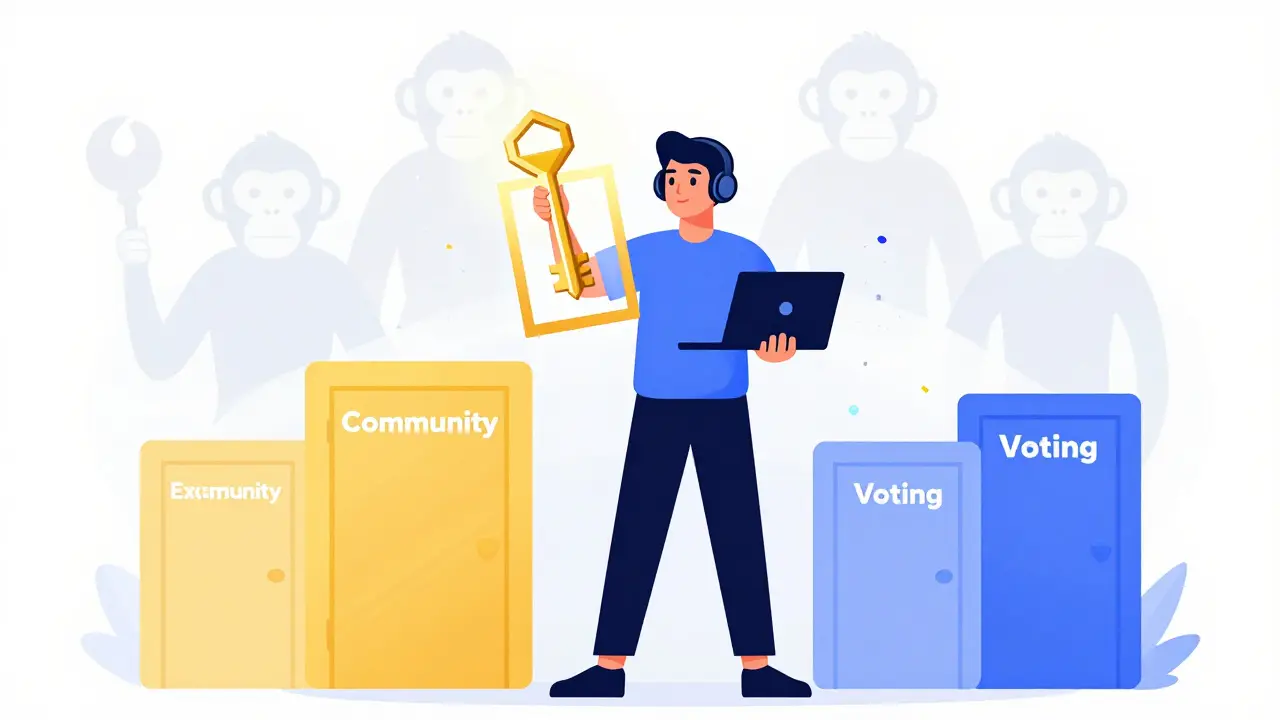
Remember when everyone thought NFTs were just expensive JPEGs of monkeys? That hype cycle has burned out. But while the speculators left, something more durable remained. For creators, non-fungible tokens have shifted from a get-rich-quick scheme to a serious business tool. In 2025 and heading into 2026, NFTs are no longer about selling art; they are about owning your audience.
If you are a creator tired of algorithm changes killing your reach or platforms taking huge cuts of your earnings, this is where things get interesting. The core problem in the creator economy isn't making content-it's keeping the money and the fans. NFTs solve this by turning casual followers into stakeholders who actually benefit when you succeed. This guide breaks down how to use this technology without needing a computer science degree.
The Shift From Speculation to Utility
To understand why NFTs matter now, you have to look at what went wrong before. In 2021, people bought digital items hoping to flip them for profit. When the market cooled, those projects died. Today, the focus is entirely on utility. What does holding this token actually *do* for the buyer?
According to data from The VC Corner’s 2025 report, 78.2% of successful creator NFT projects now offer exclusive access rather than just an image. This could be entry to a private Discord channel, early access to new music, or voting rights on future creative decisions. The token becomes a key, not just a collectible. This shift addresses the biggest pain point for modern creators: platform dependency. With social media giants like TikTok and Instagram constantly changing their rules, having a direct line to your most engaged fans via blockchain is insurance against being silenced or de-monetized overnight.
Think of it like this: Substack gives you email lists, which is great. But NFTs give you a verified, transferable proof of membership that lives outside any single company’s servers. If Twitter shuts down tomorrow, your community still holds their tokens, and you still know exactly who your top supporters are.
How Creators Actually Make Money
The financial model for NFTs has matured significantly. It is no longer a one-time sale. The real value lies in secondary market royalties. When a fan resells their token to another person, you automatically receive a percentage of that transaction. This creates a passive income stream that traditional platforms do not offer.
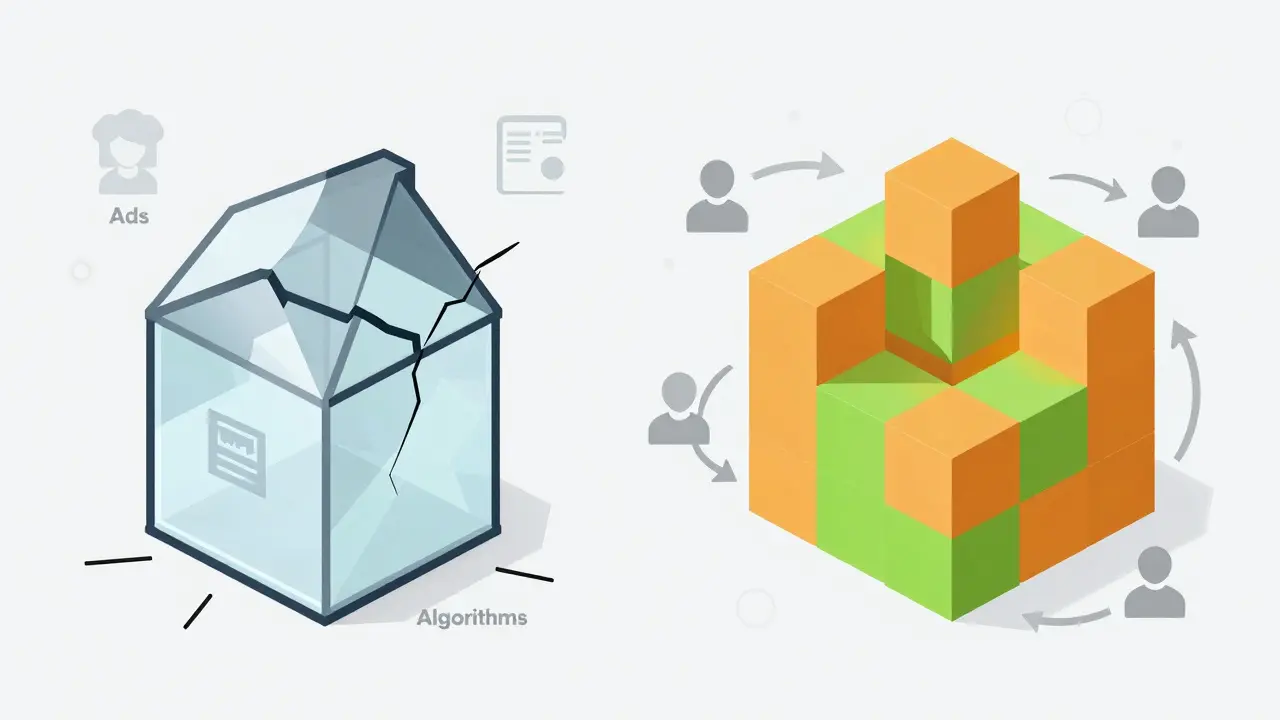
| Feature | Traditional Social Media | NFT-Based Model |
|---|---|---|
| Revenue Source | Ads, Brand Deals, Platform Payouts | Primary Sales, Secondary Royalties, Token-Gated Access |
| Audience Ownership | Rented (Platform controls data) | Owned (Creator controls wallet interactions) |
| Stability | Low (Subject to algorithm changes) | High (Direct peer-to-peer transactions) |
| Setup Complexity | Low (Sign up and post) | Moderate (Wallet setup, gas fees) |
| Long-Term Value | Decreases as attention shifts | Increases with community growth |
In 2025, average royalty rates have settled between 3.5% and 5.5%. While this might sound small, consider the volume. Successful projects generate over 68% of their total revenue from these secondary sales. This means if your community is active and trading among themselves, you earn continuously. It transforms your fanbase into a distribution network that pays you every time they share your work.
Furthermore, NFTs enable tiered membership structures. You can release a "Founder" NFT that grants lifetime benefits, and a monthly "Subscriber" NFT that requires renewal. This flexibility allows you to capture value from both high-commitment super-fans and casual supporters.
Choosing Your Blockchain: Ethereum, Polygon, or Solana?
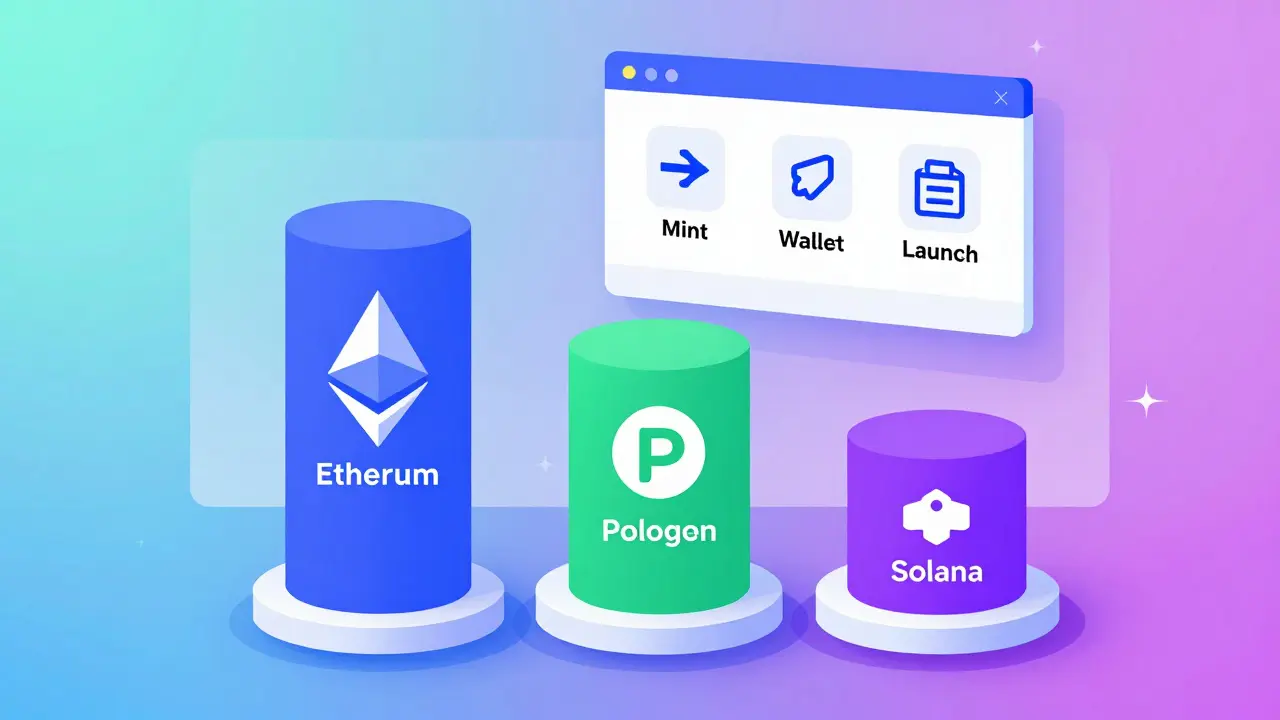
You cannot launch an NFT without choosing a blockchain. This decision affects your costs, your audience, and your environmental footprint. As of 2025, the landscape is dominated by three networks.
Ethereum is the original smart contract platform and remains the standard for high-value digital assets. It holds 68.3% of the market share for creator NFTs. Why? Because it has the most liquidity and the highest perceived value. However, it comes with high "gas fees"-transaction costs that can range from $5 to $50 depending on network congestion. This makes it better for established creators selling premium items.
Polygon is a layer-2 scaling solution built on top of Ethereum that offers low-cost transactions. With 19.7% market share, it is the go-to for creators who want to sell affordable items or run frequent drops. Transactions cost fractions of a cent, making it ideal for mass adoption. If your goal is to get 10,000 fans to buy a $5 token, Polygon is likely your best bet.
Solana is a high-performance blockchain known for speed and negligible fees. Holding 8.2% of the market, it appeals to communities that prioritize fast user experiences and mobile-friendly wallets. It has become popular in the gaming and meme sectors.
For most beginners in 2026, starting on Polygon or Solana reduces friction. If your audience is already deep in crypto, Ethereum might be necessary for credibility. There is no wrong choice, but mismatching your chain to your audience’s expectations will hurt conversion rates.
Technical Setup Without Coding
You do not need to write code to launch an NFT collection. The barrier to entry has dropped dramatically. In 2025, 83% of creators use no-code platforms to manage their projects. Tools like Shopify’s NFT Studio and integrated features on major marketplaces have abstracted away the complex parts of blockchain interaction.
Here is the basic workflow:
- Create a Wallet: This is your digital identity. MetaMask is the most common browser extension, while Phantom is popular for Solana users. Never share your seed phrase (the list of words generated during setup) with anyone.
- Choose a Marketplace: OpenSea remains the largest hub, but specialized platforms like Foundation or Rarible offer different vibes. Check which one your target audience uses.
- Mint Your Collection: Upload your images, videos, or audio files. Set your royalty percentage (usually 5%). Choose whether the supply is fixed (e.g., 100 copies) or open-ended.
- Set Up Utilities: Link your NFT to a private community channel, a discount code, or a physical product redemption page. This step is crucial for long-term success.
- Launch: Promote the drop to your existing social channels. Encourage early supporters to mint first.
The learning curve has flattened. Where it used to take weeks to learn Solidity coding, you can now launch a project in under 10 hours. The challenge is no longer technical; it is strategic. You must convince your audience why they should spend money on a token instead of just following you for free.
Common Pitfalls and How to Avoid Them
Even with easier tools, many creators fail. The failure rate for NFT projects launched by influencers with under 10,000 followers is over 60%. Why? They treat it like a cash grab rather than a service.
Pitfall 1: No Clear Utility. If your NFT is just a picture with no extra benefit, fans will hesitate. Ask yourself: "What do I get for buying this?" If the answer is "support," that’s noble, but it rarely sells well. Add tangible value like exclusive content, merchandise discounts, or governance votes.
Pitfall 2: Ignoring Gas Fees. If you launch on Ethereum during peak hours, your fans might pay more in fees than the NFT itself costs. Always test transactions during low-traffic times or use Layer-2 solutions like Polygon to keep costs near zero.
Pitfall 3: Poor Communication. Crypto-native audiences expect transparency. If you promise a roadmap, deliver it. If you delay, explain why. Trust is the currency of the creator economy. Once you lose it, you cannot regain it easily.
Pitfall 4: Overcomplicating the Onboarding. Do not ask new fans to download five different apps to join your community. Use platforms that allow credit card payments or social logins where possible. Friction kills conversions.
Is It Worth It for You?
NFTs are not for every creator. If you have a small, passive audience that rarely engages, adding a blockchain layer will confuse them. This strategy works best for creators with 5,000+ highly engaged followers who produce content with inherent collectibility-art, music, limited-edition video series, or unique experiences.
However, if you are looking to build a resilient business that survives platform bans and algorithm shifts, NFTs offer a path to true independence. By 2027, analysts project that NFTs will account for nearly 13% of total creator economy revenue. The window to establish yourself as a leader in this space is still open, but the days of easy money are gone. Now, it is about building lasting relationships through shared ownership.
Do I need cryptocurrency to start selling NFTs?
Not necessarily. Many modern platforms allow buyers to purchase NFTs using credit cards, with the platform handling the conversion to crypto behind the scenes. However, as the creator, you will typically need a small amount of cryptocurrency (like ETH or MATIC) to cover initial listing or minting fees, depending on the marketplace.
How much can I realistically earn from NFT royalties?
Earnings vary widely based on community size and activity. In 2025, successful creator projects see 3.5% to 5.5% royalty rates on secondary sales. While some top creators earn thousands monthly, most see modest supplemental income. The key is consistent engagement to encourage trading within your community.
Are NFTs environmentally friendly?
It depends on the blockchain. Ethereum previously used energy-intensive mining but switched to a proof-of-stake model in 2022, reducing energy consumption by over 99%. Chains like Polygon and Solana are designed to be energy-efficient from the start, making them eco-friendly choices for conscious creators.
Can I sell physical items using NFTs?
Yes. This is called "phygital" marketing. You can tie an NFT to a physical product, such as a t-shirt or vinyl record. The NFT acts as a certificate of authenticity and can grant access to redeem the physical item. Platforms like Shopify have made integrating physical goods with NFT ownership easier than ever.
What happens if my NFT marketplace shuts down?
Your NFTs live on the blockchain, not on the marketplace. Marketplaces are just interfaces to view and trade them. If one site closes, you can connect your wallet to another marketplace to access your assets. Your ownership is secured by cryptography, not by a company's server.