

There is a persistent rumor circulating in Indian crypto communities that the government is planning to ban non-custodial wallets. If you hold your Bitcoin or Ethereum on a Ledger or MetaMask, where you control the private keys, this news sounds terrifying. It implies that simply holding your own assets could become illegal. However, as of June 2026, there is no outright ban on non-custodial wallets in India. The reality is more nuanced and rooted in regulatory confusion rather than criminalization.
The core issue isn't a prohibition on self-custody; it's the Financial Intelligence Unit (FIU) treating all digital asset services under one broad umbrella. This has created a gray area where wallet providers are unsure if they need to register as Virtual Digital Asset Service Providers (VASPs). For users, this means your hardware wallet still works, but connecting it to the Indian financial system remains tricky. Let’s break down what the laws actually say, how they affect your daily usage, and what changes are coming in late 2026.
The Myth of the Ban vs. The Reality of Regulation
First, let’s clear the air. The Indian government has never issued an order banning non-custodial wallets. In fact, Union Minister Piyush Goyal clarified in October 2025 that while private cryptocurrencies face heavy taxation, there is no ban on ownership or self-custody tools. The confusion stems from the FIU’s March 2023 notification, which required all VASPs to register with the agency. The problem? The initial guidelines didn’t clearly distinguish between custodial exchanges (like CoinDCX or WazirX) and non-custodial wallet providers (like Exodus or Trust Wallet).
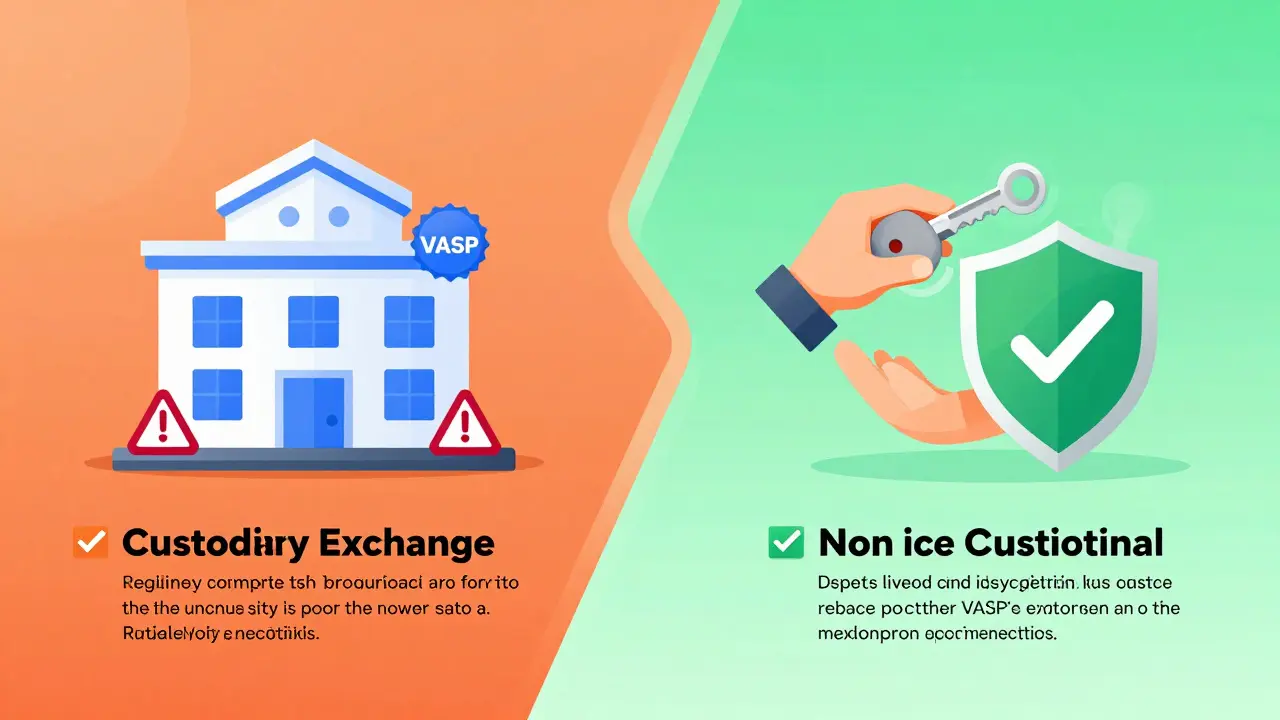
This lack of distinction caused panic. Many assumed that if a wallet provider wasn’t registered, using their app was illegal. But here’s the key technical difference: a non-custodial wallet does not hold your funds. You do. Because the service provider doesn’t have access to your private keys, they technically cannot facilitate money laundering in the same way an exchange can. This aligns with global standards set by the Financial Action Task Force (FATF), which states that non-custodial solutions aren’t VASPs unless they control user assets.
So, why the fear? Because enforcement is messy. While your wallet isn’t banned, the *services* around it might be restricted. For example, if a non-custodial wallet tries to offer direct INR buying features without proper KYC (Know Your Customer) checks, those specific features can be blocked. But downloading MetaMask and storing ETH? That remains legal.
How VASP Rules Affect Non-Custodial Users
To understand your risk, you need to understand the term Virtual Digital Asset Service Provider (VASP). In India, being classified as a VASP means you must comply with strict Anti-Money Laundering (AML) laws. Custodial exchanges are definitely VASPs. Non-custodial wallets were left in limbo.
As of early 2026, the Ministry of Finance released draft amendments to the VDA rules. These drafts explicitly state that "non-custodial wallet providers not facilitating fiat conversion shall not be classified as VASPs." This is a huge win for privacy advocates. It means that pure storage solutions-hardware wallets like the Ledger Nano Stax or software apps like Trust Wallet-are likely exempt from registration if they don’t handle fiat currency directly.
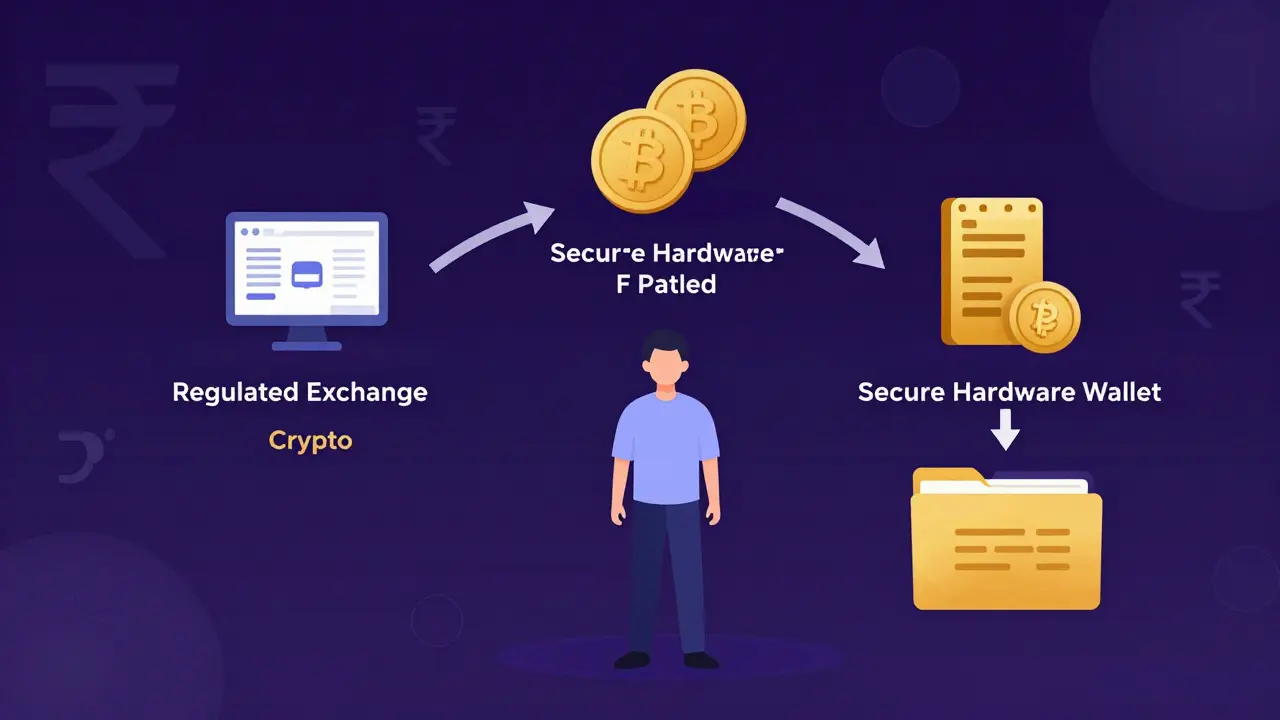
However, if your wallet integrates a third-party service to buy crypto with INR (Indian Rupees), that integration point becomes a VASP. This is why many international wallets have removed direct INR on-ramps for Indian users. They aren’t banning the wallet; they’re removing the fiat gateway to avoid regulatory headaches. You can still use the wallet, but you’ll need to buy crypto on a regulated exchange first, then transfer it to your non-custodial wallet.
| Feature | Custodial Exchange (e.g., CoinDCX) | Non-Custodial Wallet (e.g., Ledger, MetaMask) |
|---|---|---|
| VASP Status | Mandatory Registration Required | Exempt if no fiat conversion handled |
| Private Key Control | Held by Exchange | Held by User |
| TDS Applicability | 1% TDS deducted at source | No automatic TDS deduction |
| INR On-Ramp | Direct UPI/Bank Transfer supported | Limited; usually requires P2P or external exchange |
| Security Risk | Hack vulnerability (e.g., WazirX breach) | User error (lost seed phrase) |
Taxation: The Real Cost of Self-Custody
If the ban isn’t real, what hurts? Taxes. India imposes a flat 30% tax on capital gains from crypto and a 1% Tax Deducted at Source (TDS) on transactions. This applies regardless of whether you use a custodial exchange or a non-custodial wallet. The difference lies in enforcement.
When you trade on a registered exchange, the 1% TDS is automatically deducted. It’s annoying, but it’s done. With a non-custodial wallet, there is no middleman to deduct this tax. Does that mean you don’t pay? Absolutely not. Under Indian law, you are responsible for reporting these transactions yourself. This creates a significant compliance burden. Many users find it difficult to track every small transaction made via MetaMask or Trust Wallet, leading to potential errors in their Income Tax Returns (ITR).
According to Koinly’s October 2025 India tax report, nearly 45% of non-custodial wallet users made mistakes in calculating their TDS liability because they moved assets between wallets without realizing each transfer could be a taxable event. To stay safe, you must maintain auditable trails for all transactions above ₹50,000. Tools like BitcoinTaxes.in are increasingly popular among Indian holders to automate this tracking, ensuring you don’t face penalties during audits.
Practical Challenges: Buying and Selling Crypto
The biggest headache for Indian users of non-custodial wallets isn’t legality; it’s usability. Specifically, getting INR into and out of your wallet. Since most major non-custodial wallets don’t support direct UPI payments due to regulatory caution, you have to take a multi-step approach.
- Buy on a Regulated Exchange: Purchase crypto on an FIU-registered platform like CoinSwitch Kuber or ZebPay. Pay the 1% TDS here.
- Transfer to Wallet: Send the assets to your non-custodial wallet address. Note that this transfer itself might trigger tax implications depending on how you classify it, so consult a CA.
- Store Securely: Use your hardware or software wallet for long-term holding. This protects you from exchange hacks, like the $230 million WazirX breach in July 2024.
- Sell via P2P or Back to Exchange: When you want INR, send the crypto back to an exchange or use a Peer-to-Peer (P2P) marketplace. Be aware that P2P platforms are also under scrutiny for AML compliance.
This process is slower and more complex than just clicking "buy" on an app. But it offers superior security. Statista reports that 18.7 million Indians now use non-custodial wallets, driven largely by security concerns after high-profile exchange collapses. You are trading convenience for control.
Future Outlook: What to Expect in Late 2026
The regulatory landscape is shifting toward clarity. The Ministry of Finance’s recent draft amendments signal a move to align with FATF guidelines. By mid-2026, we expect formal recognition of non-custodial wallets as user-controlled tools, distinct from VASPs. This should reduce the compliance costs for wallet developers and potentially bring back some fiat integration features.
However, risks remain. The RBI continues to monitor cross-border flows, and any wallet found facilitating unmonitored large transfers could face restrictions. Additionally, infrastructure limitations persist. India has significantly fewer full Bitcoin nodes compared to countries like Germany, leading to slightly longer transaction confirmation times for some networks. As adoption grows, local node infrastructure is expected to improve, enhancing performance.
For the average user, the message is clear: Non-custodial wallets are not banned. They are a legitimate, secure way to hold crypto in India. Just remember that "not banned" doesn’t mean "tax-free." Keep your records straight, use reputable hardware devices, and stay updated on the evolving VASP definitions.
Is it illegal to use MetaMask or Trust Wallet in India?
No, it is not illegal. Using non-custodial wallets like MetaMask or Trust Wallet is perfectly legal in India. The government regulates the service providers (VASPs), not the individual users holding their own private keys. As long as you comply with tax laws, you can use these tools freely.
Do I need to pay TDS when using a non-custodial wallet?
Yes, you are liable for the 1% TDS on crypto transactions. However, unlike exchanges, non-custodial wallets do not deduct this automatically. You must calculate and deposit this tax yourself when filing your annual returns. Failure to do so can result in penalties.
Can I buy crypto directly with UPI in a non-custodial wallet?
Most major non-custodial wallets do not support direct UPI purchases for Indian users due to regulatory complexities. You typically need to buy crypto on a regulated exchange first and then transfer it to your non-custodial wallet for storage.
Are hardware wallets like Ledger safe from government bans?
Hardware wallets are physical devices that store private keys offline. There is no proposal to ban the possession of such devices. They are considered secure storage tools. The regulations target the service providers who facilitate trades, not the hardware used for storage.
What happens if I lose my seed phrase for a non-custodial wallet?
If you lose your seed phrase, your funds are permanently inaccessible. Unlike custodial exchanges, there is no customer support to reset your password. This is why securing your recovery phrase is critical. It is the ultimate responsibility of the user in a non-custodial setup.