

Bitcoin mining uses more electricity than the entire country of Norway. That’s not a metaphor. It’s a fact. In 2024, Bitcoin’s annual energy consumption hit 112.06 terawatt-hours - enough to power 10 million homes. Meanwhile, Ethereum, after switching to Proof of Stake in September 2022, dropped its energy use from 5.13 gigawatts to just 2.62 megawatts. That’s a Proof of Stake energy reduction of 99.95%. You read that right. Nearly all of it. Gone.
How Proof of Stake Works (Without the Energy Waste)
Proof of Work, the original blockchain consensus method, is like a global lottery where miners race to solve impossible math puzzles. The first one to solve it gets to add the next block and earn rewards. But here’s the catch: everyone else is solving the same puzzle at the same time. That means thousands of machines, all running 24/7, burning electricity just to lose. Bitcoin’s ASIC miners alone can sip 3,000 watts each - enough to run a small space heater nonstop. Proof of Stake throws that system out. Instead of racing to solve puzzles, validators are chosen based on how much cryptocurrency they lock up - or "stake" - as collateral. The more you stake, the higher your chance of being selected to validate the next block. But if you try to cheat? You lose your stake. It’s not about computing power. It’s about skin in the game. No more mining rigs. No more heat. No more power bills that rival small countries. Just a regular computer, 8 GB of RAM, and a few hundred dollars’ worth of ETH. That’s it.The Numbers Don’t Lie: PoS vs PoW Energy Comparison
Let’s put this in real terms.- Ethereum (PoW): 5.13 gigawatts of power used annually - equal to the output of five large power plants.
- Ethereum (PoS): 2.62 megawatts - less than a single data center.
- Bitcoin per transaction: 830 kWh. That’s enough to power an average U.S. home for over a month.
- Ethereum per transaction: 0.036 kWh. Less than running a lightbulb for an hour.
Why This Matters Beyond the Environment
It’s not just about saving the planet. It’s about legitimacy. Before the Merge, institutional investors like Fidelity and Grayscale avoided Ethereum because of its energy footprint. Their clients - pension funds, endowments, family offices - had strict ESG (Environmental, Social, Governance) rules. Bitcoin? Too dirty. Ethereum? Too wasteful. After the switch, Fidelity updated its 2023 ESG report to say: "The dramatic reduction in energy consumption was critical to our institutional clients’ acceptance of Ethereum as a viable investment." That shift opened the floodgates. In 2024, 67 of the top 100 financial institutions supported PoS-based assets. Only 29 did before the Merge. Companies holding crypto now prioritize PoS networks - 73% of them, according to Bitwave.io’s corporate treasury report. Why? Because they can’t risk being labeled greenwashers. Even regulators noticed. The European Union’s MiCA regulations treat PoS validators differently from PoW miners - recognizing the fundamental difference in environmental impact. In the U.S., Senators Lummis and Gillibrand introduced the Pro-Proof-of-Stake Act in 2023 to legally distinguish PoS as a sustainable alternative.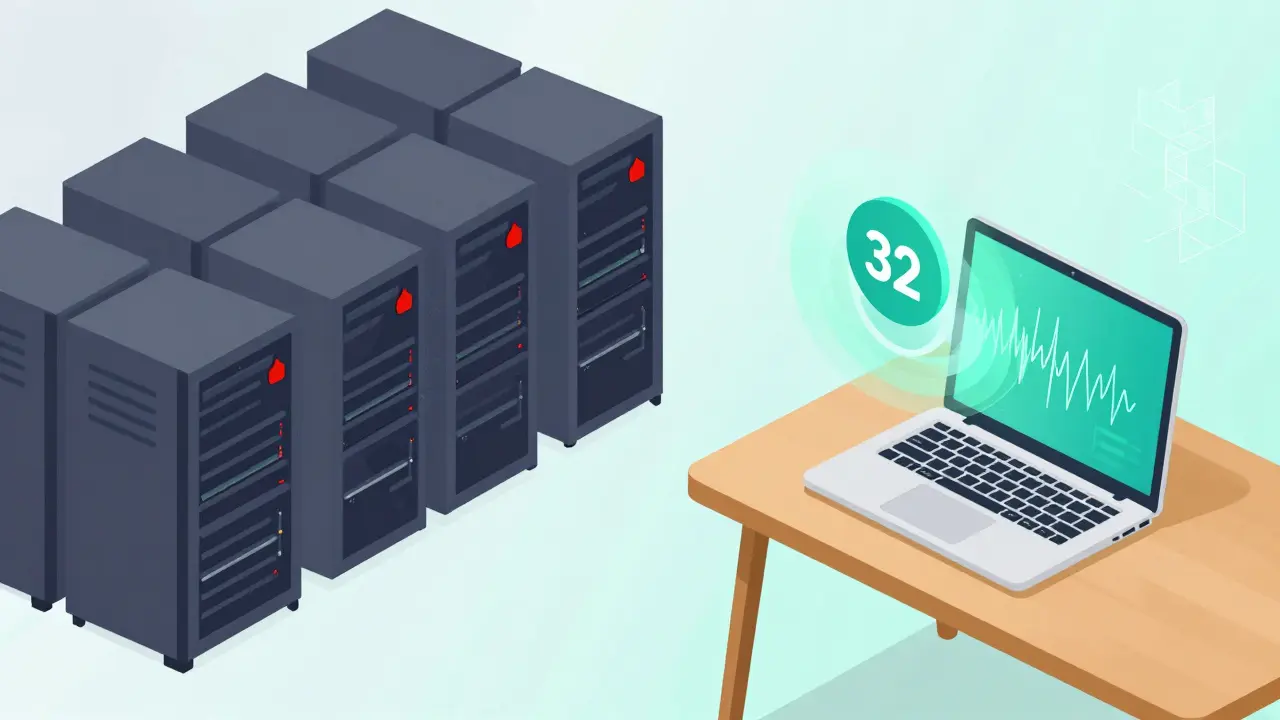
Who Can Participate? Lower Barriers, Not Higher
PoW mining became a corporate game. You needed $15,000 for an ASIC miner, a warehouse to house it, and a cheap power deal. Small players got squeezed out. PoS flipped that. You don’t need a warehouse. You don’t need a power plant. You just need 32 ETH - about $102,400 as of late 2024 - and a decent laptop. That’s still steep for most people. But here’s the twist: you don’t have to stake 32 ETH yourself. Platforms like Lido, Coinbase, and Kraken let you stake as little as $10. You send your ETH to them, they pool it with others, and you earn a share of the rewards - typically 3-4% annually. No technical skills needed. No hardware. Just a wallet. In Q1 2024 alone, Coinbase added 1.2 million new stakers. That’s not just investors. That’s teachers, nurses, freelancers - people who care about earning passive income without destroying the planet.What About Centralization Risks?
Critics say PoS favors the rich. If you have more ETH, you get chosen more often. Isn’t that just plutocracy? It’s a valid concern. But in practice, it hasn’t played out that way. Yes, large staking pools like Lido control about 32% of all staked ETH. But that’s not because they’re hoarding power - it’s because they make participation easy. And the network still runs securely. No major PoS chain has ever been hacked through validator collusion. Plus, the system has built-in checks. Validators are randomly selected. If one tries to act maliciously, they’re slashed - their stake is wiped out. The economic incentive is to behave, not to dominate. Compare that to Bitcoin, where 75% of mining power is concentrated in just three Chinese mining pools. That’s centralization too - just of a different kind.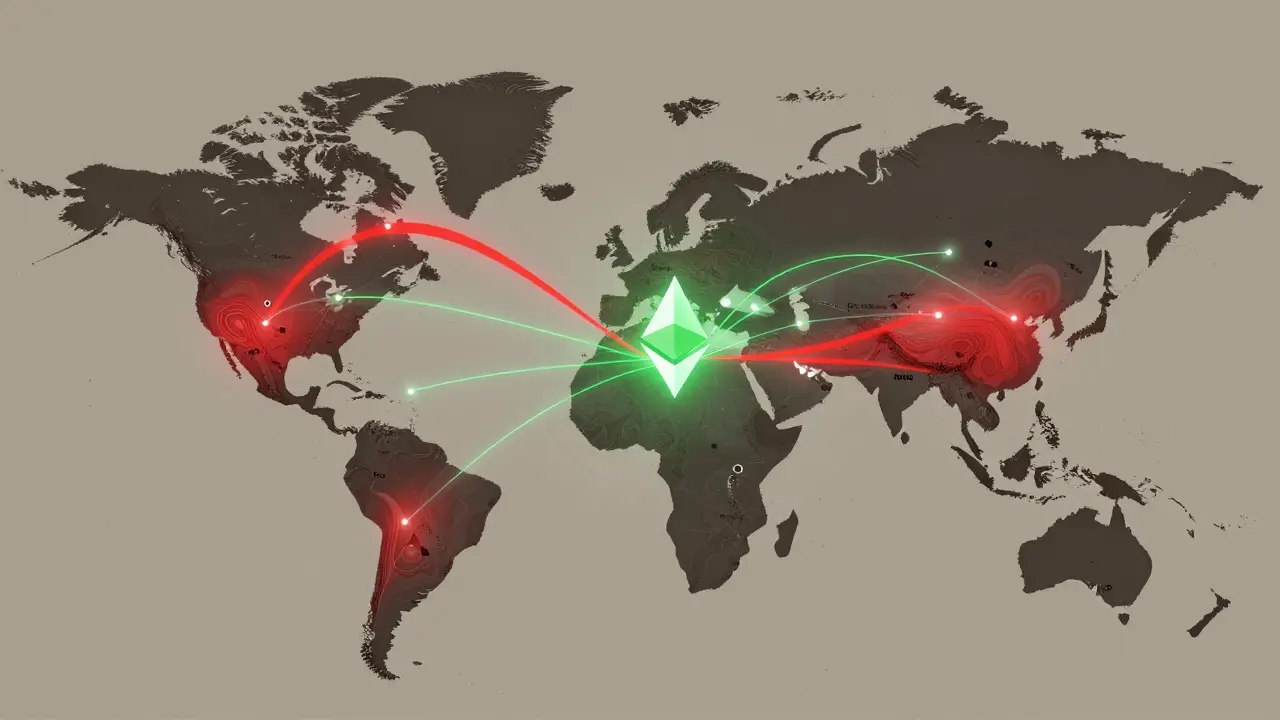
24 Responses
So let me get this straight-you’re telling me we replaced a global lottery with a ‘stake your cash and hope you’re picked’ system, and now it’s ‘green’? Cool. Meanwhile, my GPU still fries itself trying to mine Monero. Where’s the fairness in that?
PoS is just Wall Street’s way of locking out the little guy. If you don’t have six figures to burn, you’re just a spectator. This isn’t decentralization-it’s plutocracy with better PR.
I’ve been staking 12 ETH through Lido since 2023. My laptop runs cooler than my toaster. No noise, no heat, no power bill spikes. I earn 3.7% annually. I’m not a miner. I’m not a speculator. I’m just someone who believes in sustainable tech. This is how it’s supposed to work.
The real question isn’t whether PoS is more efficient-it’s whether we’ve traded one form of exploitation for another. PoW exploited energy. PoS exploits capital. Both systems concentrate power. The difference? One leaves behind scorched earth, the other leaves behind a ledger of wealth inequality. We call it progress because the numbers look better on a spreadsheet, but we’re still playing the same game-just with different chips.
Let’s be precise: Ethereum’s PoW energy use was 5.13 gigawatts annually; post-Merge, it’s 2.62 megawatts. That’s a 99.95% reduction-not ‘nearly all,’ not ‘roughly,’ but 99.95%. The math is irrefutable. And yes, that’s less than a single data center. Not a metaphor. Not a guess. A documented, audited, third-party-verified fact. If you’re still arguing about this, you’re not skeptical-you’re willfully ignorant.
poS is just crypto bros with more money than sense pretending they saved the planet. meanwhile, the miners who got kicked out? they’re selling their rigs for scrap. the real environmental cost? the e-waste from all those asics. no one talks about that. #greenwashing
I’m from India, and I staked $50 on Kraken last month. No fancy rig. Just my phone and a Wi-Fi connection. I didn’t save the planet, but I didn’t hurt it either. That’s enough for me.
For those who say PoS is only for the rich-have you checked out staking pools? I’ve helped three friends in my village start staking with under $100 each. No tech skills. No hardware. Just trust and a little patience. This isn’t elitism-it’s accessibility, if you’re willing to look beyond the hype.
So you’re saying a computer that runs on 2.62 megawatts is somehow more ethical than a bunch of machines that use 5.13 gigawatts? Cool. I’ll believe it when the energy grid stops burning coal to power my local data center.
The paradigmatic shift from Proof-of-Work to Proof-of-Stake represents a quantum leap in computational sustainability. The energy efficiency differential-quantified at 99.95%-is not merely statistically significant; it is ontologically transformative. We are witnessing the obsolescence of energy-intensive consensus mechanisms in favor of capital-based validation architectures, which align with the post-carbon digital ethos. This is not evolution-it is revolution.
You call this progress? I call it a shell game. The same people who owned the miners now own the stakes. Nothing changed. Just the name on the door.
Look, I get it-PoS is efficient. But let’s not pretend it’s not just a fancy way of saying ‘the rich get richer.’ And don’t even get me started on liquid staking derivatives. You stake your ETH, get a tokenized version of it, then use that token to borrow more ETH, then stake that? It’s like financial origami made of smoke and mirrors. And you’re calling this sustainable? I call it leverage with a green ribbon.
POW = wasteful. POS = smart. done. 🚀
They say PoS is secure… but what if the staking pools get hacked? What if Lido gets taken over by the Fed? What if they just… freeze your stake? They’ve already done it with fiat. Don’t you think they’ll do it here? This isn’t freedom. It’s just a new kind of prison-with better UX.
i staked 32 eth on my old macbook pro. it runs like a dream. no fan noise. no heat. just quiet. no one talks about how peaceful it is. its like the internet finally learned to breathe.
I get why people are skeptical about centralization. But Lido’s 32% isn’t because they’re hoarding power-it’s because they’re the most user-friendly option. And the network still runs on 99.9% uptime. That’s not centralization. That’s convenience with security. And honestly? If you can’t trust a system that slashes cheaters and rewards honesty, then maybe the problem isn’t PoS-it’s your trust in technology.
i dont get why people still compare btc to eth like its the same thing. btc is like a gold vault. eth is like a smart contract engine. comparing their energy use is like comparing a candle to a laser cutter. they do different things. stop being dumb.
99.95% less power? sure. but what about the carbon cost of all those new servers running 24/7 for validators? no one measures that. and what about the fact that all the old mining rigs are just sitting in landfills? this isn’t clean. its just quieter.
I just found out my neighbor’s husband staked $100k in ETH and now he’s ‘making passive income.’ Meanwhile, I work two jobs just to pay rent. This isn’t empowerment. It’s a class war dressed in blockchain pajamas.
poS is just crypto for trust fund babies. the rest of us still got to grind. #richpeopleproblems
I’ve been running a validator node on a Raspberry Pi 4 with 8GB RAM. It’s been up for 11 months. No downtime. No noise. No electricity bill worth mentioning. I’m not a tech wizard-I’m a school teacher. If I can do this, anyone can. The barrier is perception, not hardware.
I think we’re missing the bigger picture: PoS isn’t just about energy-it’s about redefining participation. Before, you needed to be a hardware millionaire. Now, you just need to believe. And that’s the real innovation. It’s not about how much you own-it’s about how much you’re willing to commit. That’s not plutocracy. That’s democracy with skin in the game.
The environmental argument is compelling, but let’s not ignore the social implications. PoS has democratized participation in ways PoW never could-especially for people in developing nations who can’t afford ASICs but can afford a smartphone and $10. That’s not just energy efficiency. That’s economic inclusion.
They say PoS is the future. But what if the future is just a corporate server farm with a fancy whitepaper? What if the only thing that changed is the label on the energy bill? I’m not against progress-I’m against pretending we’ve solved anything when we’ve just moved the pollution to another room.