
When you trade Bitcoin on an exchange, you expect it to be safe. But who makes sure it is? Governments move slowly. Regulations lag behind innovation. That’s where self-regulatory organizations in crypto come in - industry-led groups trying to fill the gap before lawmakers catch up.
What Exactly Is a Crypto SRO?
A self-regulatory organization (SRO) in crypto isn’t a government agency. It’s not the SEC or the CFTC. It’s a group of crypto companies - exchanges, wallet providers, trading firms - that agree to follow the same rules. Think of it like a club with a code of conduct. Members sign up, follow the rules, and get audited. If they break them, they face penalties. The idea started gaining traction around 2018. Brian Quintenz, then a commissioner at the U.S. Commodity Futures Trading Commission, pointed out a big problem: crypto was growing fast, but no one was in charge. He suggested a Cryptocurrency Self-Regulatory Organization - a CSRO - to bring order without stifling innovation. Unlike traditional SROs like FINRA, which regulates stock brokers in the U.S., crypto SROs are still experimental. They don’t have the same legal power. They rely on voluntary membership. But they’re trying to build the same kind of trust: clear rules, fair enforcement, and transparency.What Do Crypto SROs Actually Do?
Crypto SROs focus on three big things: compliance, standards, and accountability. First, they enforce the Travel Rule. This is a FATF rule that requires crypto companies to share sender and receiver info for transactions over $3,000. It’s meant to stop money laundering. But implementing it isn’t easy. How do you track a transaction from a non-custodial wallet? Most SROs use tools like TRISA - an open-source network that lets exchanges securely share this data. By late 2023, TRISA had connected 87 firms and processed over 1.2 million compliant transactions. Second, they set technical standards. Crypto moves fast. Governments can’t keep up. SROs can. They develop protocols for KYC, AML, and asset listing. The Virtual Commodity Association (VCA), one of the earliest proposals, wanted to define what counts as a “virtual commodity” and who qualifies as a platform operator. That kind of clarity helps exchanges avoid legal gray zones. Third, they handle disputes. If a user loses funds due to a platform’s error, or if two exchanges disagree on asset classification, an SRO can step in. They don’t have courts, but they can suspend membership, issue public warnings, or require refunds. That’s a lot more than just fines - it’s reputation risk.Where Are Crypto SROs Working Right Now?
Switzerland is the only country where crypto SROs are mandatory. Since January 2020, all crypto firms operating there must join one of six government-approved SROs. As of late 2023, 178 firms were registered under these SROs. The Swiss model works because it’s not optional. No SRO, no license. It’s a clean system: clear rules, clear consequences. In the U.S., it’s different. There’s no federal law requiring SRO membership. So far, only about 22 of the top 100 exchanges have joined any voluntary initiative. The Blockchain Association proposed a U.S.-based CSRO in 2021, but it’s still in draft form. The FIT21 Act, passed by the House in May 2024, encourages SROs - but doesn’t require them. That leaves a lot of room for loopholes. The European Union’s MiCA regulation, which went live in June 2024, is a game-changer. It doesn’t name SROs directly, but it requires crypto firms to be under “adequate regulatory oversight.” Industry analysts believe this will push dozens of new SROs into existence across EU member states. If a company wants to operate in the EU, it will need to join one.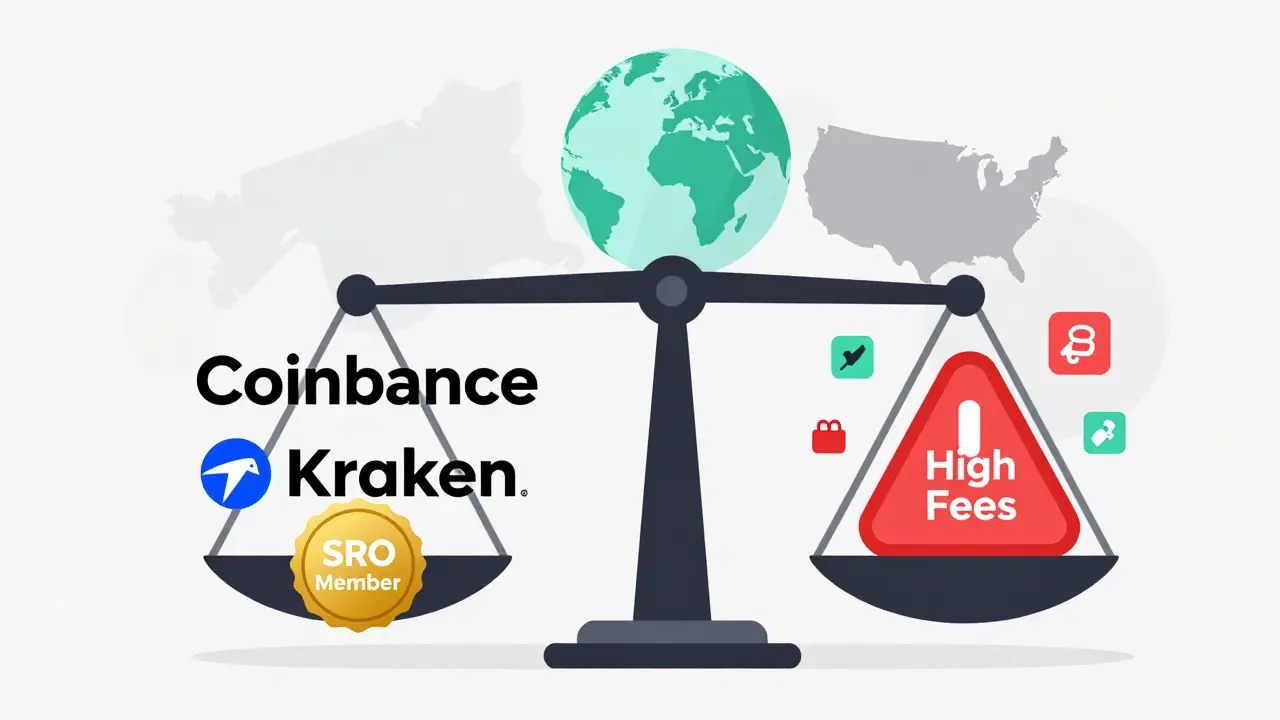
Why Do Some People Support Crypto SROs?
Supporters say SROs are the only realistic path forward. Governments can’t hire enough experts to monitor thousands of crypto projects. They can’t write rules fast enough. SROs, by contrast, are made up of people who actually build and run these platforms. Take the Travel Rule. The FATF announced it in 2019. It took the industry just 18 months to build TRISA - an open, interoperable system that works across borders. The government would’ve taken five years, if it happened at all. Crypto firms also like that SROs reduce uncertainty. Coinbase publicly backed industry-led standards in 2021. Why? Because investors and institutions want to know who’s trustworthy. If an exchange is part of an SRO, it signals they’re not a fly-by-night operation. Reddit users echoed this sentiment in March 2023. Of 342 comments on r/CryptoCurrency, 78% preferred industry self-regulation over direct government control. One user summed it up: “FINRA took 10 years to implement Reg BI. Crypto can’t afford that timeline.”What Are the Big Problems With Crypto SROs?
The biggest issue? Voluntary participation. If only 30-40% of the market joins, the rest can ignore the rules. That’s called regulatory arbitrage. A user can move their funds to a non-member exchange and bypass compliance entirely. Then there’s the power imbalance. Most SROs are led by big players - Coinbase, Kraken, Binance. Smaller exchanges worry about costs. A 2019 survey found 62% of small exchanges feared membership fees could hit $50,000 a year. For a startup, that’s more than their entire annual budget. There’s also the conflict of interest problem. If the same companies that profit from crypto are the ones writing the rules, who’s watching the watchers? A July 2022 poll by the Blockchain Association showed 57% of respondents believed SROs would favor big exchanges. Former Acting Comptroller of the Currency Brian Brooks warned in 2023 that without strong governance, SROs could become “cartels that stifle innovation.” And then there’s DeFi. Most SROs only regulate custodial platforms - exchanges and wallets that hold your keys. But 54% of the $50 billion locked in DeFi protocols operates without any legal entity behind it. No one can shut down a smart contract. No SRO can audit a decentralized protocol. That’s a blind spot no current model can fix.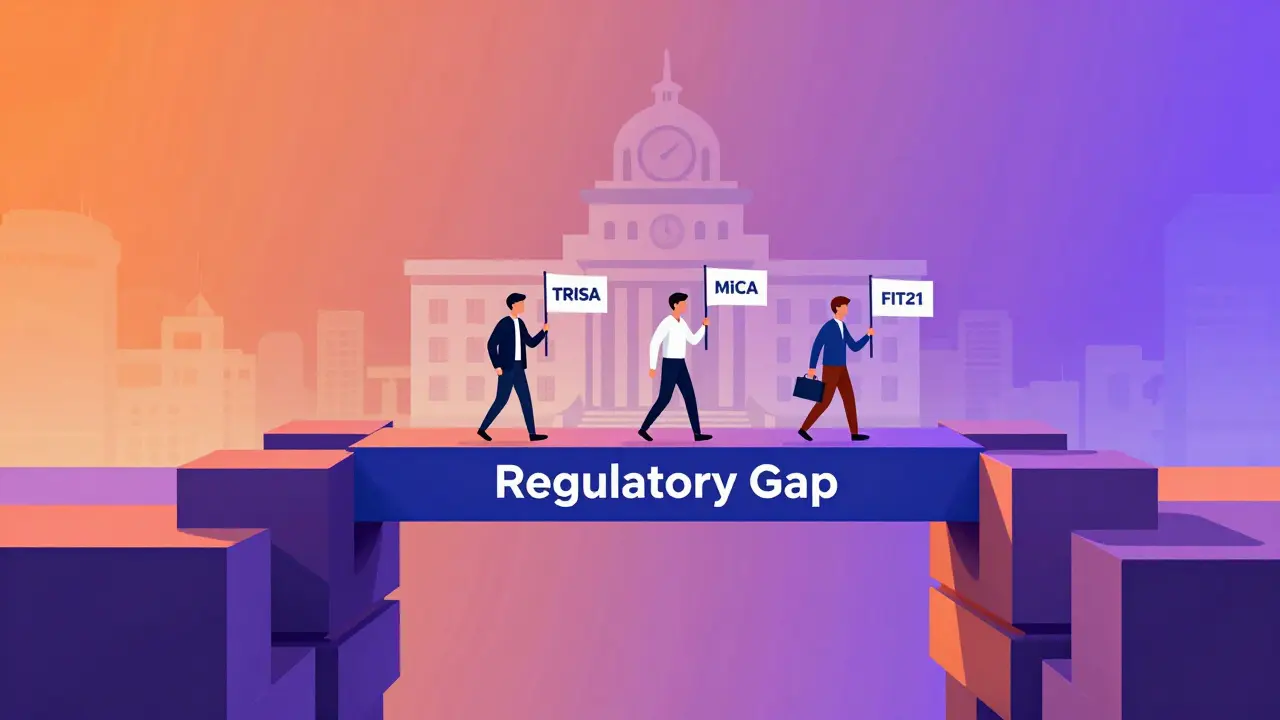
Who’s Paying for This?
Running an SRO isn’t cheap. FINRA spends $1.2 billion a year and employs 3,600 people to regulate 4,250 broker-dealers. Crypto SROs don’t have that kind of money. Switzerland’s six SROs together employ fewer than 150 staff to oversee 178 firms. That’s lean, but it works because the scope is smaller and the rules are clearer. Membership fees are the main funding source. But they have to be fair. The Blockchain Association’s 2022 survey found that exchanges with annual compliance budgets under $200,000 struggle to afford SRO fees. That’s why some propose tiered pricing: small firms pay less, big ones pay more. There’s also the cost of training. Joining an SRO isn’t just signing a form. Exchanges need to train staff in blockchain forensics, AML compliance, and smart contract auditing. Certifications like CAMS ($1,695) or Chainalysis Reactor ($2,500/year) add up. For a small exchange, that’s hundreds of hours and thousands of dollars just to stay compliant.What’s Next for Crypto SROs?
The next 18 months will be critical. The SEC is asking for public input on possible SRO frameworks - responses were due in September 2024. That’s a sign they’re seriously considering formalizing the role. Global Digital Finance (GDF) is planning a cross-border SRO launch in Q1 2025. It’s backed by firms from the U.S., EU, and Asia. If it works, it could become the first truly international crypto regulator. Meanwhile, TRISA is expanding. It’s now integrating with more wallet providers and exploring how to handle non-custodial transactions - the biggest technical hurdle left. The real test? Will SROs survive the next major hack? The KuCoin breach in 2020 lost $281 million. The Ronin Network hack in 2022 cost $630 million. If an SRO had clear standards for security audits, would those losses have been prevented? That’s the question regulators and users are asking.Will Crypto SROs Work?
They won’t replace governments. But they don’t need to. Their job isn’t to be the police. It’s to be the bridge. Right now, crypto is caught between two worlds: one where rules are written by bureaucrats who don’t understand blockchain, and another where anyone can launch a token with no oversight. SROs are trying to carve out a third path - one where the industry sets its own standards, under the watchful eye of regulators. The Swiss model proves it’s possible. The EU’s MiCA regulation gives it momentum. The U.S. is watching. If SROs can solve the membership gap, lower costs for small players, and extend their reach into DeFi, they could become the backbone of crypto’s legitimacy. If they don’t? Then governments will step in - with rules that are slow, rigid, and out of touch. That’s the real risk. Not that SROs are too powerful. But that they’re too weak to matter.Are crypto self-regulatory organizations legally binding?
Not by default. Crypto SROs are voluntary unless required by law. In Switzerland, joining an SRO is mandatory for licensed crypto firms. In the U.S., membership is optional. But if a government agency like the SEC or FINMA recognizes an SRO’s rules, then breaking them can lead to legal consequences - like fines, license revocation, or criminal charges. So while the SRO itself doesn’t have police power, its standards can become enforceable through regulators.
Do crypto SROs regulate DeFi protocols?
Currently, no. Most crypto SROs only cover custodial platforms - exchanges and wallets that hold users’ keys. DeFi protocols, which run on smart contracts without central operators, fall outside their scope. That’s a major gap. Around 54% of the $50 billion locked in DeFi as of mid-2023 operates without any legal entity. SROs haven’t figured out how to audit code or enforce rules on decentralized systems. Some proposals are exploring on-chain compliance tools, but nothing is operational yet.
How do crypto SROs differ from FINRA?
FINRA is a government-delegated regulator with mandatory membership for all U.S. broker-dealers. It has legal authority, a $1.2 billion budget, and 3,600 staff. Crypto SROs are voluntary, underfunded, and lack legal power unless backed by regulators. FINRA regulates stocks and bonds; crypto SROs focus on digital assets. FINRA’s rules take years to develop. Crypto SROs move faster - but cover far fewer firms. Think of FINRA as a full-time police force. Crypto SROs are like neighborhood watch groups hoping to get official backup.
Can small crypto exchanges afford to join an SRO?
It’s tough. A 2019 survey found 62% of small exchanges worried membership fees could exceed $50,000 per year. That’s more than many small exchanges spend on compliance in total. The average annual compliance budget for a small exchange is around $187,000, according to Delphi Digital. Some SROs are starting to offer tiered pricing based on trading volume, but it’s not widespread. Without affordable options, SROs risk becoming tools for big players to lock out competition.
What’s the biggest threat to crypto SROs?
The biggest threat is fragmentation. If only a third of the market joins, bad actors can operate freely on non-member platforms. That undermines trust. It also creates a race to the bottom - exchanges cut corners to avoid fees. Without universal participation, SROs can’t prevent systemic risk. The 2022 Ronin Network hack showed how one weak link can collapse confidence across the whole ecosystem. SROs need scale to work - and right now, they’re too small to matter.
29 Responses
Honestly I think this is the only way crypto can grow without getting crushed by old-school regulators. Governments move like glaciers, but crypto moves like lightning. If we wait for them to catch up, we’ll be stuck with rules made for banks in the 1980s. SROs? They’re not perfect, but they’re alive. They’re trying. TRISA alone has handled over a million compliant trades - that’s not luck, that’s real progress. I’m from India, and I’ve seen how slow bureaucracy can be. Here, at least, the industry is stepping up. Let’s not kill the bridge before we cross it.
Self regulatory organizations are a fantasy dressed up as pragmatism. You can't have a regulatory body that's funded and controlled by the very entities it's supposed to police. That's not regulation that's collusion. The SEC didn't fail because it was slow it failed because it was never allowed to be real. Voluntary compliance is a joke. If you don't have subpoena power you don't have power at all. And don't even get me started on how these so called standards are written by Coinbase and Kraken while small players get priced out. This isn't innovation this is capture.
Look we all know the truth here. America built the internet and now we're letting Europe and Switzerland dictate how crypto works. MiCA? Swiss SROs? That's just globalism with blockchain jargon. We don't need some fancy international club to tell us how to run our own digital economy. If you want compliance fine. But make it American. Make it enforceable. Not some watered down club where the biggest players write the rules and call it self regulation. This is weak. We need muscle not handshakes.
From a protocol governance standpoint the real innovation isn't the SRO per se but the emergence of interoperable compliance rails like TRISA as a decentralized compliance layer. This represents a shift from top-down regulatory arbitrage to bottom-up protocolized KYC/AML orchestration. The key insight is that compliance can be compositional - not just contractual but cryptographically enforced. We're essentially witnessing the genesis of a regulatory stack that's API-native rather than document-native. This is the first time in financial history that compliance infrastructure can scale horizontally without central coordination.
Yessss this is what I've been saying!! 🙌 SROs are the quiet heroes of crypto. People act like they're just optional extras but they're the reason your funds didn't vanish in 2022. And honestly? The fact that TRISA works across borders? That's huge. We don't need to wait for Congress to wake up. We can build the future now. Small exchanges? Yeah they need help - but let's fix that with tiered fees not by giving up on the whole idea. We can do better. We're smarter than this 💪
Of course you're all singing the SRO hymn because you're too lazy to demand real regulation. You want to pretend that crypto is somehow above the law. But here's the truth - if you're not regulated you're not legitimate. And if you're not legitimate you're a gambling den with a whitepaper. The fact that you think TRISA is some kind of miracle is proof you don't understand how markets work. Real markets have rules enforced by people with badges not by tech bros with GitHub accounts.
bro if sros didnt exist we wouldve all lost our shit after the ftx crash. no one was ready. but trisa? it just kept going. people got paid. exchanges got audited. no drama. no panic. just code doing its job. yeah its not perfect but its alive. and that matters more than any senate hearing ever will. we dont need permission to fix things. we just need to do it.
This whole thing is a scam. The same people who got rich off crypto now want to be the gatekeepers. You think they care about small exchanges? They care about control. They want to make sure no one else can compete. And don't even mention DeFi. You can't regulate code. You can't audit a smart contract like it's a bank statement. This isn't innovation. It's corporate capture with a blockchain sticker on it.
While I appreciate the initiative taken by industry participants to establish self regulatory frameworks it is imperative that such mechanisms be transparent inclusive and accountable to all stakeholders particularly those from emerging economies. The cost structure must be equitable and the governance structure must not be dominated by a few large entities. Without this the risk of systemic exclusion becomes real and the legitimacy of the entire framework is undermined. We must ensure that innovation does not come at the cost of equity.
What is regulation if not a social contract between power and trust? The state has always been the arbiter of that contract. But here we are - a decentralized network of actors trying to write the terms of their own legitimacy. Is this evolution or illusion? If the rules are voluntary are they rules at all? Or are they just signals - performative gestures meant to appease regulators while the real power remains in code and liquidity? The SRO is a mirror. It reflects our desire to be seen as responsible without surrendering autonomy. And maybe that's the real innovation - not the compliance tools but the tension itself.
I love how you framed this as a bridge not a replacement. That’s the exact vibe I feel when I see small devs in Nigeria or India using TRISA to send crypto safely. They don’t care about the SEC or MiCA - they care that their money doesn’t vanish. SROs aren’t about power. They’re about safety. And yeah maybe they’re messy right now - but look at how fast they’ve moved compared to any government agency. Let’s lift up the small ones not tear down the whole system. We’ve got this.
The structural asymmetry between traditional SROs and crypto SROs is profound. FINRA operates within a legal ecosystem where statutory authority is codified and institutional memory is decades deep. Crypto SROs operate in a vacuum - their legitimacy is contingent upon regulatory recognition rather than inherent authority. This creates a fragile equilibrium. The moment a regulator withdraws tacit approval the entire edifice collapses. The Swiss model works because it is legally mandated. The U.S. model is a house of cards built on goodwill and investor confidence. The real question is not whether SROs can scale - it is whether they can survive the moment when the regulators decide they are no longer useful.
Yeah right SROs are the answer. What a joke. You think a bunch of crypto bros in San Francisco are gonna fix money laundering? The only thing they're regulating is who gets to use the fancy logo on their website. And DeFi? Forget it. You can't audit code that runs on a thousand nodes. This whole thing is theater. The real players are still hiding in offshore wallets and no SRO in the world can touch them. We're just playing dress up while the real crime keeps going.
It is worth noting that the European Union's MiCA regulation does not explicitly mandate self-regulatory organizations but creates a regulatory environment in which their existence becomes functionally necessary. By requiring adequate oversight and imposing liability on service providers MiCA effectively incentivizes industry participants to form or join SROs as a means of demonstrating compliance. This regulatory architecture is elegant - it does not force SROs into law but allows them to emerge organically as a pragmatic solution to compliance complexity. The result is a bottom-up regulatory ecosystem that balances innovation with accountability.
People are acting like SROs are some kind of miracle cure. But let's be real - if you're not part of the club you're still in the dark. And who decides who gets in? The same guys who made billions off this. I'm not saying we shouldn't try. But let's not pretend this isn't just a way to lock out the little guys. And what about the people in countries where no one even knows what an SRO is? Are they just supposed to trust the big exchanges? This isn't progress. It's just a new kind of gatekeeping.
TRISA is actually kind of wild when you think about it. It's like the internet but for compliance. No one owns it. Everyone uses it. And it just works. That's the real win here - not the fancy reports or the press releases. It's that two small exchanges in Brazil and Indonesia can send money to each other without lawyers or paperwork. That's the future. Not some big government mandate. Just good code and shared standards.
Of course you’re all praising SROs. Because you’re the ones who benefit. The rest of us? We’re the ones who get stuck with the bills. You want to call this innovation? It’s just a new form of monopoly. The big players write the rules then charge everyone else to follow them. And don’t even get me started on how they ignore DeFi like it doesn’t exist. That’s where the real money is. And they know it. So they pretend it’s not real. Classic.
Wow what a surprise - the people who made money off crypto are now the ones writing the rulebook. Who could’ve guessed? SROs are just the corporate version of ‘trust me bro’ with a fancy website. And the fact that you’re all acting like this is some kind of breakthrough? I’m laughing. You think Switzerland’s model is the answer? It’s just a small country with fewer than 200 firms. Try scaling that to the U.S. and see how fast it collapses. This isn’t regulation. It’s PR with a blockchain logo.
I get why people like SROs. They feel like progress. But let’s not ignore the elephant in the room - if only 30% of the market joins then the rest just go dark. That’s not a system. That’s a loophole factory. And when the next big hack happens? It’ll be on a non-member exchange. Then what? We blame the SRO? Or do we just pretend the problem doesn’t exist? We need universal participation or we need to admit this whole thing is a placebo.
Self-regulation in the absence of statutory authority is a legal oxymoron. The notion that industry groups can establish binding norms without enforcement mechanisms is not merely impractical - it is epistemologically incoherent. Regulatory legitimacy derives from delegated state power. Absent that, compliance is merely a marketing strategy. The Swiss model succeeds not because of its innovation but because it is codified in national law. Without such backing, crypto SROs are nothing more than voluntary associations with aspirational branding.
you call this progress? its just the same old story. big companies get to write the rules and small ones pay the price. and now they want to charge $50k a year just to play? what a joke. and dont even get me started on how they ignore deifi like its not even there. the whole thing is a distraction. real regulation would be faster and fairer.
Oh here we go again the sro fairy tale. Let me guess next you'll say they're gonna regulate DeFi next? Lol. You think a smart contract gives a damn about your compliance manual? This isn't innovation it's delusion. And the fact that you're all acting like this is some kind of win? You're not helping. You're just making it harder for real solutions to emerge. SROs are the comfort blanket of the crypto elite. Wake up.
Switzerland is a tiny country with a banking culture. The U.S. has a $2 trillion crypto market. You can't copy-paste a Swiss model onto America and call it a solution. And don't tell me MiCA is the answer - Europe is already drowning in bureaucracy. This isn't about regulation. It's about control. The real question is: who gets to decide what 'safe' means? The people using crypto? Or the people who want to profit from regulating it?
Everyone acts like SROs are the future but they're just a way for big players to avoid real oversight. If you're not forced to join you're not regulated. And DeFi? Forget it. You can't audit code that runs on a thousand nodes. This isn't innovation it's evasion. And the fact that you're all pretending this works? You're not helping. You're just delaying the real conversation.
Yessss I’m so proud of us 🥹✨ We’re building the future with code and heart! SROs? They’re not perfect but they’re OURS. And TRISA? It’s like a digital handshake across borders 💞 No lawyers. No paperwork. Just trust. And yeah maybe small exchanges struggle - but we can fix that! We’re a community! We don’t need permission to be great! 🌍🚀 #CryptoForThePeople
OMG I’m literally crying. This is the most beautiful thing I’ve read all year. 🥺💖 SROs are like the little engine that could - chugging along while the big banks sleep. And TRISA? It’s magic. I don’t care if it’s not perfect. It’s REAL. And if you don’t see that then you’re just scared of change. 💪🔥 #TrustTheProcess
The establishment of self-regulatory mechanisms in the cryptocurrency domain represents a necessary evolutionary step in the maturation of digital asset markets. However, the absence of a universally recognized legal framework and the disproportionate cost of compliance for small market participants present substantial challenges to equitable implementation. A tiered fee structure anchored to transaction volume and geographic economic indicators is imperative to ensure inclusivity. Without such measures, the risk of regulatory capture and market centralization becomes inevitable.
Just read your comment about the 30% participation problem - you’re 100% right. But here’s what I think: the answer isn’t to scrap SROs. It’s to make them mandatory for anyone who wants to list on a major exchange or access banking rails. That’s the leverage we already have. If you want to be on Coinbase or get a USD wire? You join. No negotiation. That’s how you get scale without waiting for Congress. We don’t need to wait for permission. We just need to use the power we already hold.
That’s exactly what I was thinking. The real power isn’t in the SRO itself - it’s in the gatekeepers. Exchanges, banks, payment processors. If they say ‘no SRO, no access’ - boom. Problem solved. No law needed. Just market pressure. And yeah, small players will cry. But if they can’t afford the fee, maybe they shouldn’t be handling other people’s money. Let them build on DeFi or stay small. But don’t pretend you’re safe if you’re not playing by the same rules.