
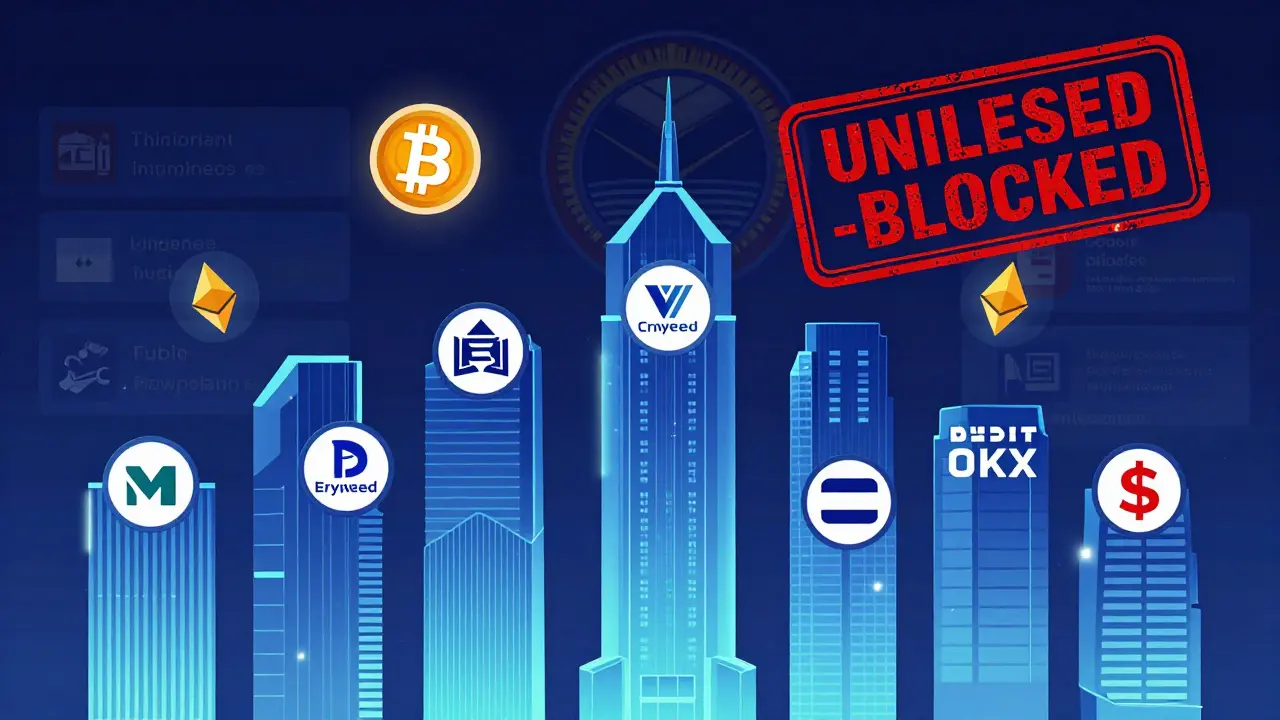
When Thailand tightened its crypto rules in April 2025, it didn’t just change a few forms - it rewrote the entire game for anyone trading digital assets in the country. If you’re a Thai investor, a foreign exchange operator, or even a traveler using crypto while visiting Bangkok, these new rules directly affect you. The Thailand SEC crypto regulations are now among the strictest in Southeast Asia, and they’re not just about stopping scams. They’re about control - who can operate, what coins you can trade, and how much money you can move in and out of the country.
Who Needs a License? And What Happens if You Don’t Get One?
The Thailand Securities and Exchange Commission (SEC) made one thing crystal clear: if you’re running a crypto exchange and Thai people are using it, you need a license. Period. This isn’t just about having a Thai office or a Thai-language website. The SEC laid out seven specific triggers that mean you’re serving Thai users - and if even one applies, you’re under their jurisdiction.
- Your platform shows content in Thai
- You use a .th or .ไทย domain
- You accept payments in Thai baht or through Thai bank accounts
- You say Thai law governs your terms
- You pay for ads targeting Thai users on Google or Facebook
- You have staff or support offices in Thailand
- You meet any other criteria the SEC adds later
Before April 2025, platforms like Bybit and OKX could operate freely in Thailand. After the new rules kicked in, they were blocked within days. The Ministry of Digital Economy and Society (MDES) now has the power to shut down unlicensed sites instantly - no court order needed. That’s not common anywhere else in the region. Singapore lets foreign exchanges operate with minimal oversight. Thailand doesn’t. If you’re not licensed, you’re off the grid.
The Nine Licensed Exchanges (And Why They’re So Limited)
As of February 2025, only nine entities had been approved to operate as licensed digital asset platforms in Thailand. The biggest is Bitkub, which handles about 60% of all local trading volume. Others include Zipmex, AssetCrypto, and Binance Thailand - yes, Binance got licensed after restructuring its Thai operations.
But here’s the catch: these exchanges can’t offer what most global platforms do. They’re banned from:
- Trading privacy coins like Monero or Zcash
- Allowing users to stake tokens and earn guaranteed returns
- Offering lending or deposit services with interest
- Listing meme coins, fan tokens, or NFTs
- Using wallet services to transfer crypto for payments
As of June 2025, only 35 digital assets are approved for trading on Thai exchanges. Compare that to Binance’s 350+ or Coinbase’s 200+. The SEC has approved Bitcoin and Ethereum for ETFs, but nothing else. If you want to trade Solana, Cardano, or Dogecoin, you can’t do it legally on a Thai exchange. Many users have turned to VPNs to access foreign platforms - an estimated 35% of Thai crypto activity now happens offshore.
How Much Does It Cost to Get Licensed?
Getting a license isn’t cheap. The application fee is ฿1,000,000 (about $27,400). Once approved, you pay ฿500,000 ($13,700) every year just to stay licensed. But that’s just the start. You also need:
- Minimum capital of ฿50 million ($1.37 million) in reserve
- Proof of AML/CFT systems that meet FATF standards
- A full source code audit from an SEC-approved firm
- Real-time transaction monitoring software built to SEC specs
Bitkub took six months to fully comply. Other exchanges reported spending over $2 million on tech upgrades alone. The average approval time is 90 to 120 days. For many foreign platforms, the cost and complexity aren’t worth it - especially since they still can’t offer most of the coins their users want.
What Users Are Saying - And Why It’s Mixed
On Pantip.com, Thailand’s biggest online forum, users are split. Thread #1284567, with 142 upvotes, says: “I haven’t been scammed since the foreign exchanges left.” That’s not surprising. Crypto fraud reports dropped 37% in Q2 2025 after the crackdown. The SEC’s strict rules have made it harder for phishing sites and fake ICOs to operate.
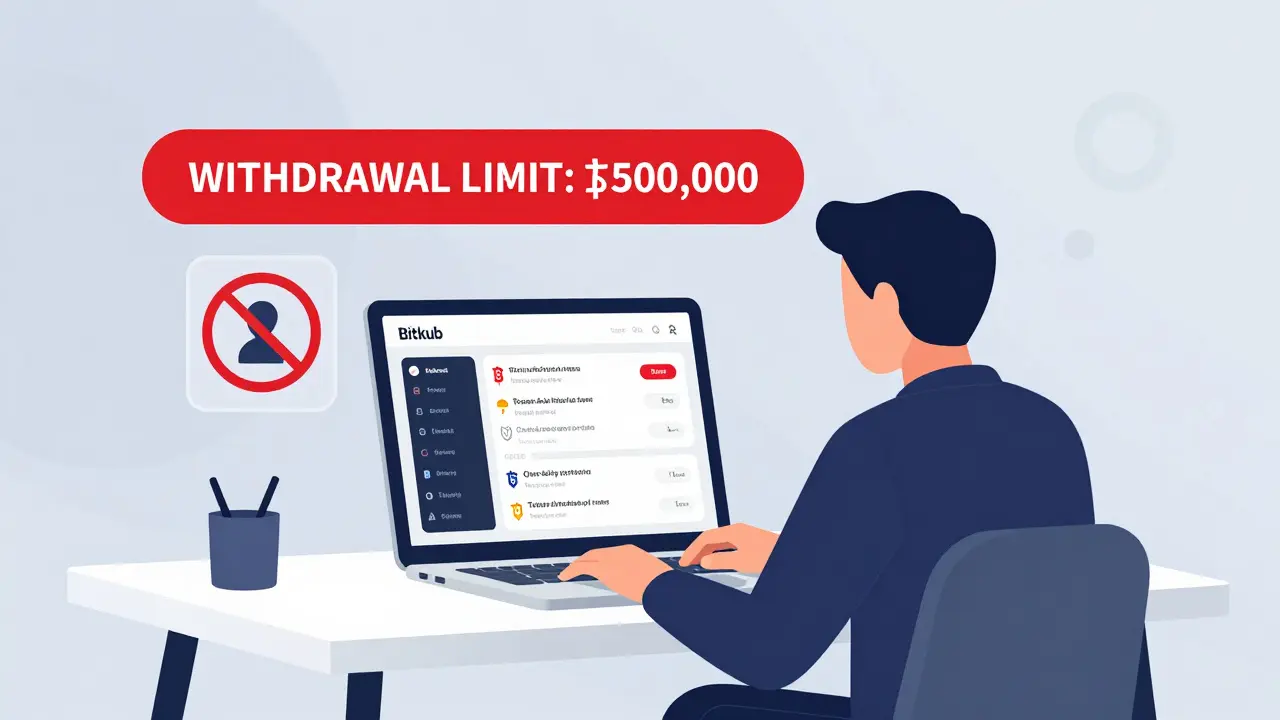
But Thread #1285678, with 203 upvotes, says: “My daily withdrawal limit is ฿500,000. That’s not enough to trade seriously.” That’s the reality for serious traders. Withdrawal caps, low liquidity, and higher fees (0.25% average vs. 0.1% on international platforms) are pushing users away.
Reddit user u/BangkokCryptoTrader noted: “I switched to Bitkub, but I can’t trade anything except BTC and ETH. I miss my altcoins.” That’s the trade-off: safety over choice.
How Thailand Compares to Other Countries
Thailand’s rules are tighter than Singapore’s, where foreign exchanges can operate with minimal local requirements. They’re looser than China’s total ban. But they’re not as flexible as Japan’s, which allows foreign platforms to operate under a simpler registration system.
Compared to the EU’s MiCA framework, Thailand lacks two big things: clear rules for stablecoins and cross-border license recognition. If a European exchange is licensed in Germany, it can’t automatically serve Thai users - it still needs a separate Thai license. That’s a major barrier for global firms.
The unique advantage? The SEC’s seven-point test for jurisdiction. No other country has defined exactly how to determine if a foreign platform is serving its citizens. That gives Thailand real enforcement power - even against companies headquartered overseas.

What’s Next? The Road Ahead
The SEC isn’t done. By Q4 2025, they plan to update the Digital Asset Business Act to include rules for decentralized finance (DeFi) platforms. That’s a big deal - because right now, DeFi protocols like Uniswap or Aave are completely unregulated, even if Thai users access them.
Also coming in Q2 2026: a pilot project to integrate Thailand’s central bank digital currency (CBDC) with licensed exchanges. This could let users move between baht and crypto more easily - but only through approved platforms.
Meanwhile, the government is spending ฿2.1 billion ($57.6 million) on blockchain innovation through 2027. That money is going to public infrastructure, not crypto trading. It’s a signal: Thailand wants blockchain tech - but not uncontrolled speculation.
Final Reality Check
If you’re a Thai resident, your options are now limited - but safer. You can’t trade Dogecoin or stake Solana. You can’t withdraw more than ฿500,000 a day. But you also won’t get tricked by a fake exchange.
If you’re a foreign exchange, you have two choices: leave Thailand, or spend millions to comply - and still offer a watered-down product. Most are leaving.
And if you’re a traveler? Don’t assume you can use your usual app. The SEC doesn’t care if you’re just visiting. If your phone shows a Thai IP, and you’re using Thai baht, you’re under their rules.
The Thailand SEC crypto regulations aren’t about innovation. They’re about control. And so far, they’re working - for the government, at least.
Are foreign crypto exchanges completely banned in Thailand?
Yes, if they serve Thai users without a license. Platforms like Bybit and OKX were blocked in April 2025 because they met at least one of the SEC’s seven jurisdiction triggers - such as accepting Thai baht or having a Thai-language interface. Only exchanges licensed by the Thailand SEC can legally operate in the country.
Can I still use Binance in Thailand?
Yes, but only through Binance Thailand - the licensed local entity. The global Binance.com platform is blocked. Binance Thailand offers a limited selection of assets (only BTC and ETH are approved for spot trading), and it follows all Thai SEC rules including withdrawal limits and no staking rewards.
What coins can I trade on Thai exchanges?
As of June 2025, only 35 digital assets are approved for trading. These include Bitcoin, Ethereum, and a few others like XRP and DOT. Meme coins, fan tokens, NFTs, and privacy coins are completely banned. The SEC is not planning to approve more tokens anytime soon.
Is staking crypto allowed in Thailand?
No. Licensed Thai exchanges are explicitly prohibited from offering staking services that promise returns. This includes anything that resembles interest, rewards, or yield farming. The SEC considers these activities too risky and close to unlicensed financial products.
Can I use a VPN to access foreign exchanges in Thailand?
Technically, yes - but it’s a legal gray area. The SEC targets platform operators, not individual users. However, using a VPN to bypass restrictions violates Thai cybercrime laws if you’re actively trading on unlicensed platforms. While enforcement against individuals is rare, the government has warned that future laws may criminalize such behavior.
17 Responses
so like... i just tried to buy some solana on bitkub and it wasnt even there?? like wtf?? i thought thailand was supposed to be crypto friendly?? now i gotta use a vpn and hope my bank doesnt flag me?? this is such a mess
Safe but stifling. That’s the trade-off. I’d rather have limited options than lose everything to a sketchy exchange. No regrets.
I mean, seriously?? They banned STAKING?? Like, what is this, 2017?? And they think they’re protecting people?? No, they’re just protecting their own power grab under the guise of 'consumer protection'!!! And don’t even get me started on the $2M+ compliance costs-this isn’t regulation, it’s extortion dressed up as policy!!! Who even approved this?? A committee of bureaucrats with no clue how blockchain works?? I’m done. I’m moving my entire portfolio offshore. And I’m not even sorry.
The regulatory framework is commendable. It reflects a mature approach to financial governance. However, the exclusion of DeFi and altcoins appears to be a significant oversight. One must question the economic rationale behind such a restrictive stance.
This is just the beginning. They’re building a digital iron curtain. Next thing you know, they’ll be tracking your IP and jailbreaking your phone for using a VPN. This isn’t about safety-it’s about control. Mark my words.
Thailand’s doing what America should’ve done years ago. No more crypto wild west. If you want to play, you follow the rules. Period.
They’re not protecting investors. They’re protecting themselves. Every time they ban a coin, it’s because they can’t tax it. Every limit? It’s because they can’t monitor it. This isn’t regulation-it’s a cash grab with a PR team.
I get why they did it. Scams were out of control. But man... I miss trading my doge like it was 2021. I’m not mad, just... kinda nostalgic. Bitkub’s clean, sure. But it’s like eating kale when you used to have pizza.
Look, I know it sucks for traders who want altcoins, but let’s be real-most people in Thailand didn’t even know what staking was. They just saw ‘earn 20% APY’ and threw in their life savings. The SEC didn’t kill innovation. They killed greed. And honestly? That’s a win. The real innovation is happening in public blockchain infrastructure, not in meme coin gambling. This is the foundation for something better. Don’t give up on it yet.
I visited Bangkok last month and tried to use my US exchange app and it just said blocked. I didn’t even know Thailand had rules this strict. Now I get why everyone there uses Bitkub. It’s not ideal but it’s honest. I respect that.
Actually, Singapore’s approach is smarter. Letting foreign exchanges operate with light oversight creates competition. Thailand’s method is just isolationism disguised as security.
For anyone considering trading under these rules: if you’re serious, you need to understand the compliance burden. The SEC doesn’t just want paperwork-they want real-time monitoring, audited code, and proof of capital. Most small platforms can’t handle this. That’s why only nine made it. But here’s the upside: if you’re licensed, you’re in a clean ecosystem. No rug pulls, no fake projects, no pump-and-dumps. The trade-off is choice, but the security is real. If you’re a long-term holder, not a day trader, this might actually be the safest place in Asia to hold crypto. Just manage your expectations.
I think Thailand’s approach is actually really thoughtful. They’re not trying to be the next crypto hub. They’re trying to build a stable, trustworthy system. That’s worth something. I’ve seen too many countries chase hype and burn people. This? This is maturity.
The state is consolidating financial sovereignty. This is not regulation. It is the institutionalization of financial feudalism. The individual is rendered a subject. The blockchain was meant to liberate. Now it is caged.
So let me get this straight... you can’t stake Solana but you can buy a $500k Lamborghini? Yeah, Thailand’s got priorities.
I just cried reading about the withdrawal limit. I spent months saving to buy ETH... and now I can’t even move it? I feel like I’m in a prison where the bars are made of blockchain code
Honestly? I’m glad they’re doing this. I’ve had friends get scammed. I’d rather have fewer coins and sleep at night.