

You’ve probably seen the buzz around AI in crypto. It’s everywhere. But most projects are just slapping "AI" onto a token to grab attention. AI Agent Factory is a decentralized platform that lets you create, own, and monetize AI agents as NFTs. Unlike generic hype tokens, AIAF tries to solve a real problem: who actually owns the AI models driving the industry right now? Currently, big tech companies hold all the cards. AIAF flips that script by putting ownership back in your hands through blockchain technology.
If you’re wondering if this is just another meme coin or a legitimate infrastructure play, you’re asking the right question. The answer lies in how the platform works, not just what it promises. Let’s break down exactly what AIAF is, how the AIAF crypto coin functions, and whether it has any staying power in the current market.
The Core Concept: Turning AI Agents into Digital Assets
At its heart, AI Agent Factory isn’t just a token; it’s an ecosystem. Think of it as a marketplace where artificial intelligence models are treated like digital collectibles or software products. In traditional tech, if you build an AI chatbot, you host it on a server, pay for electricity, and hope users pay you. If the server goes down, your business stops. Plus, you don’t have a verifiable proof of ownership that others can trust without checking your credentials.
AIAF changes this by tokenizing AI agents as Non-Fungible Tokens (NFTs). When you create an AI agent on the platform, you mint it as an NFT. This gives you cryptographic proof of ownership. You can then sell that agent, lease it out, or charge subscription fees for its use. The buyer gets access to the AI’s capabilities, but you retain the rights defined in the smart contract. This creates a new asset class: programmable AI with clear ownership records on the blockchain.
This model addresses the centralization issue head-on. Right now, if Google or OpenAI decides to shut down a service, millions of users lose access instantly. With decentralized AI agents, the code and logic exist on-chain or in decentralized storage. As long as the network runs, the agent persists. This shifts power from corporate servers to individual creators and node operators.
How the Technology Works Under the Hood
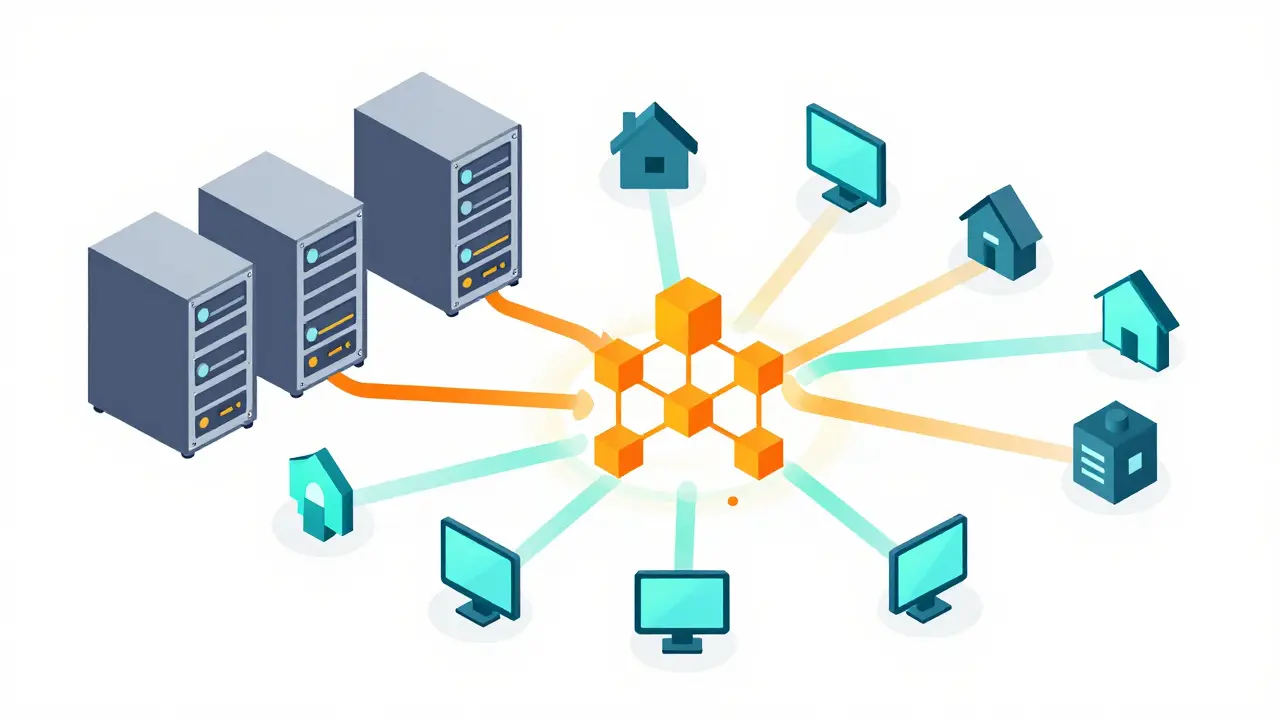
A pretty idea means nothing without solid engineering. AIAF relies on a few key technical pillars to make this vision work. First, there’s the compute layer. Running AI inference requires serious processing power, usually from high-end GPUs. Most people don’t have data centers in their basements. To solve this, AIAF uses a hybrid compute network.
This network combines professional GPU farming operations with decentralized nodes. Professional farms ensure enterprise-grade speed and reliability for heavy tasks. Decentralized nodes allow everyday users with decent hardware to contribute computing power and earn rewards. This distribution prevents bottlenecks and keeps costs lower than centralized cloud providers like AWS or Azure might charge for similar specialized AI workloads.
Second, the platform integrates with zkSync Era. zkSync is a Layer 2 scaling solution for Ethereum. Why does this matter? Ethereum transactions can be slow and expensive during peak times. By using zkSync, AIAF gets the security guarantees of Ethereum mainnet but with faster transaction speeds and significantly lower gas fees. This is crucial for a platform where users might interact with AI agents multiple times a day. If every interaction cost $5 in gas fees, the product would fail. zkSync keeps those costs manageable.
Third, the system supports no-code creation. You don’t need to be a Python expert to deploy an AI agent. The interface allows users to configure parameters, select base models, and set behavior rules without writing complex code. For developers, deeper customization options exist, allowing them to integrate custom algorithms or train specific models before deploying them as NFTs.
Tokenomics: Understanding the AIAF Coin
Every crypto project needs a token, but the design matters. The AIAF token serves as the fuel for the ecosystem. Here is the breakdown of the supply structure:
- Total Supply: 1,000,000,000 (1 billion) tokens.
- Maximum Supply: 1,000,000,000 tokens.
- Circulating Supply: Approximately 1 billion tokens are currently tradable.
The fact that the circulating supply matches the total supply suggests that all tokens have been issued, though liquidity and distribution may vary. This avoids the uncertainty of unknown future emissions diluting holder value later. However, you should always check the vesting schedules for team and investor allocations, as large unlocks can impact price stability.
The Fully Diluted Valuation (FDV) is listed at roughly BTC 0.4748. FDV represents the theoretical market cap if all tokens were in circulation and priced at the current rate. Since the circulating supply is already near maximum, the FDV is a fairly accurate reflection of the current market valuation rather than a speculative future metric. This makes it easier to compare AIAF against other established projects without worrying about hidden inflation.
Market Performance and Price Volatility
Let’s talk numbers, because that’s what many of you care about. As of May 2026, AIAF is a micro-cap asset. According to CoinGecko, the market capitalization sits around $55,738 USD. That puts it at rank #7920 on global cryptocurrency lists. To put that in perspective, top-tier coins have market caps in the billions. AIAF is still in its early adoption phase.
Price data shows significant fragmentation across exchanges, which is common for low-liquidity tokens:
| Exchange / Aggregator | Price (USD) | Notes |
|---|---|---|
| Coinbase | $0.00000953 | Lowest reported price |
| Crypto.com | $0.00002026 | AIAF/WETH pair |
| Binance | $0.000026 | Highest reported price |
Why such a huge difference? It’s likely due to low trading volume. When only a few trades happen, a single buy or sell order can swing the price wildly. CoinGecko aggregates data from one primary exchange and one market using a volume-weighted average. The 24-hour trading volume is extremely thin, hovering around $76 to $110 depending on the source. This lack of liquidity means you could face high slippage if you try to trade large amounts. Always use limit orders rather than market orders when dealing with micro-caps like this.
Recent momentum shows a 1.6% increase over 24 hours, but a 16% drop over the previous week. This volatility is typical for emerging projects. It reflects speculative interest rather than stable utility demand at this stage.
Monetization Models for Creators
One of AIAF’s strongest arguments is how it helps creators make money. Traditional AI development is expensive and risky. AIAF offers three distinct revenue streams:
- Subscriptions: Users pay a recurring fee to access your AI agent. This provides predictable income for the creator.
- API Access Fees: Developers can integrate your AI agent into their own applications and pay per call. This scales well if your agent becomes popular in third-party tools.
- Direct Sales: You can sell the NFT outright. The buyer gets the agent, and you get paid once. This is ideal for one-off solutions or specialized models.
This flexibility allows creators to test different business models. Maybe you start with direct sales to gauge interest, then switch to subscriptions if users want ongoing support. The smart contracts handle the payments automatically, ensuring you get your cut without needing a middleman like PayPal or Stripe, which often ban high-risk crypto-related businesses.

Risks and Considerations Before Investing
No investment is risk-free, especially in crypto. Here are the red flags and challenges you need to keep in mind regarding AIAF:
- Liquidity Risk: With daily volumes under $100, exiting a position quickly without crashing the price is nearly impossible. Only invest what you can afford to lock up for months or years.
- Adoption Uncertainty: While the concept is sound, actual user adoption remains unproven. There is limited public data on active users, number of deployed agents, or revenue generated through the platform.
- Technical Competition: Other projects are also exploring decentralized AI. Platforms like Fetch.ai or SingularityNET offer similar services. AIAF needs to differentiate itself through better UX, lower costs, or unique features to survive.
- Regulatory Landscape: AI regulation is evolving rapidly globally. Rules around AI ownership, data privacy, and algorithmic transparency could impact how these platforms operate. Ensure you understand the legal implications in your jurisdiction.
Also, note that detailed information about the founding team, security audits, and specific launch dates is scarce in public documentation. In crypto, anonymity is common, but it increases counterparty risk. Look for updates on GitHub activity, community engagement, and official announcements to gauge development progress.
Who Is AIAF For?
This platform isn’t for everyone. If you’re looking for quick flips or guaranteed returns, stay away. AIAF is designed for two types of people:
First, AI developers and creators who want to own their intellectual property and monetize it directly. If you’ve built a niche AI tool and hate relying on app stores or cloud providers, this gives you control.
Second, crypto investors interested in long-term infrastructure plays. You believe AI will dominate the next decade and want exposure to protocols that enable decentralized AI ownership. You’re willing to tolerate extreme volatility for potential upside if the ecosystem grows.
For casual traders, the low liquidity and high volatility make this a dangerous bet. For enterprise users, the lack of established track record might be a barrier. But for early adopters who understand both AI and blockchain, AIAF represents a tangible experiment in democratizing technology ownership.
Is AI Agent Factory (AIAF) a scam?
There is no evidence suggesting AIAF is a scam. It has a working technical architecture, integrates with reputable Layer 2 solutions like zkSync Era, and lists on major aggregators like CoinGecko. However, it is a high-risk, low-liquidity asset. The lack of detailed team information and low trading volume mean you should exercise caution and do your own research before investing.
Where can I buy AIAF tokens?
AIAF is primarily traded on decentralized exchanges. The most active pair is AIAF/WETH on Uniswap V2. You can also find listings on Crypto.com and potentially Binance, though liquidity varies significantly. To trade, you’ll need an Ethereum-compatible wallet like MetaMask and some ETH for gas fees.
What is the total supply of AIAF?
The total supply of AIAF is fixed at 1,000,000,000 (1 billion) tokens. The circulating supply is also approximately 1 billion, meaning all tokens have been issued. This fixed supply model prevents future inflation from diluting token value.
How does AIAF differ from other AI crypto projects?
Unlike projects that focus solely on data sharing or compute renting, AIAF emphasizes ownership of AI agents as NFTs. This allows creators to monetize their models through subscriptions, API fees, or direct sales while retaining cryptographic proof of ownership. Its hybrid compute network and zkSync integration also aim to balance performance with low transaction costs.
Can I create an AI agent without coding skills?
Yes. AIAF offers a no-code interface that allows users to configure and deploy AI agents without programming expertise. Developers can still access advanced tools for custom model training and integration, making the platform accessible to both beginners and experts.