
The Unchangeable Ledger Explained Simply
Imagine writing a note in ink that cannot be erased, smudged, or moved to a different page once the book is closed. That is essentially what blockchain immutability is a foundational principle where data stored on a network cannot be altered or deleted after confirmation. It might sound like magic, but it is actually hard math and computer science working together. In our modern world where digital footprints can vanish or get hacked easily, this feature is becoming a bedrock for trust.
You have probably heard about Bitcoin or Ethereum, but understanding why their records stay forever changes everything. When you send money through a traditional bank, they hold the ledger. They decide what happens. With blockchain, the whole network holds the ledger, and nobody gets to just edit it. This distinction is huge for businesses, governments, and regular people who want to know that their data is safe.
Quick Summary: What You Need To Know
- Definition: Once data is recorded, it cannot be changed or deleted by anyone.
- Technology: Relies on cryptographic hashes linking every block to the previous one.
- Security: Changing one record requires rewriting the entire chain, which is computationally impossible for large networks.
- Reality Check: It is "practical" immutability; extreme scenarios like a 51% attack exist but are rare.
- Use Cases: Ideal for supply chains, finance, legal records, and anything requiring audit trails.
How Immutability Actually Works
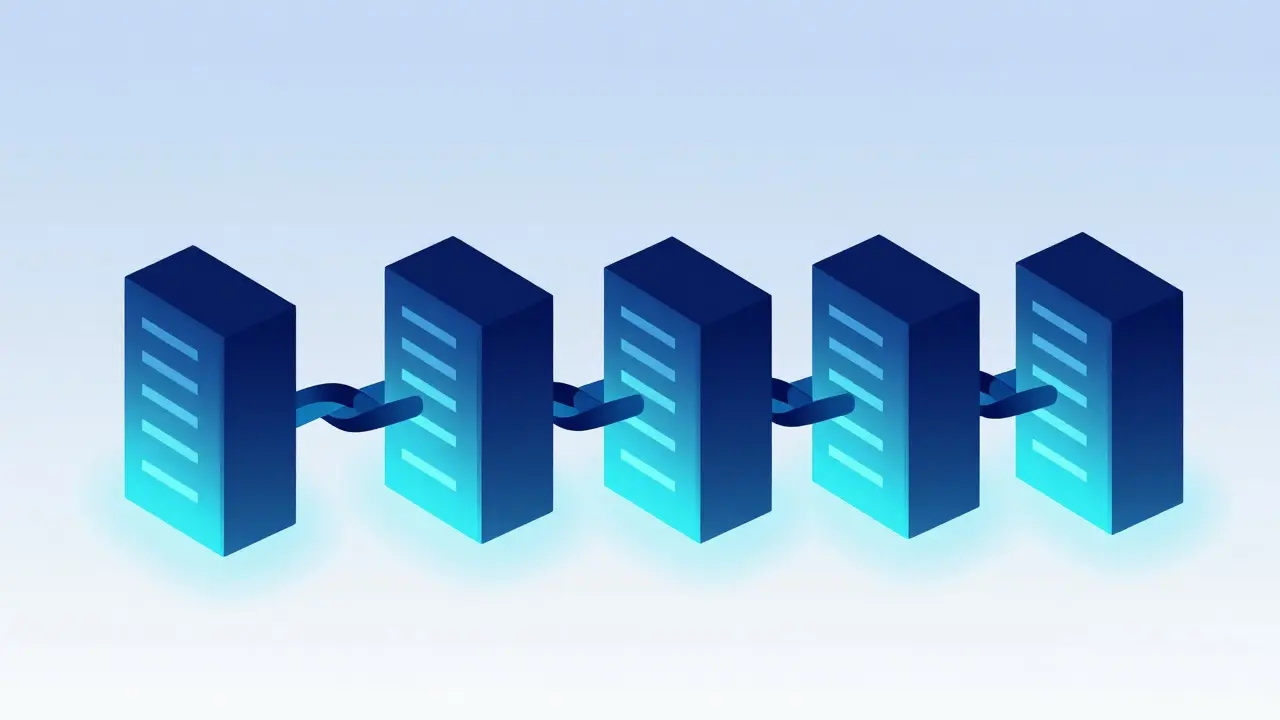
To really get this, you don't need a PhD in cryptography. Think of the blockchain as a digital chain of boxes. Each box holds a bunch of transactions. Inside each box is a unique fingerprint called a hash. This fingerprint is generated using complex mathematics known as cryptographic hashing is a process that converts input data of any size into a fixed-size string of characters representing the data's identity..
Here is the clever part. Each new box contains the fingerprint of the box before it. If you try to go back and change a number in an old box, its fingerprint changes. Because the next box relies on that fingerprint, its link breaks too. You would need to fix the fingerprint of that box, and then the one after it, and so on, for every single block added since your change. As the chain grows longer, this becomes exponentially harder.
Why This Matters For Trust
We live in an age of skepticism. People doubt banks, governments, and even news reports. Distributed Ledger Technology is a system where a ledger is updated and shared across multiple nodes in a network without a central administrator. Immutability turns trust into something you can verify mathematically rather than something you just hope for. If a company claims they donated $1 million to charity, and that donation is on an immutable ledger, you can check it yourself. You don't need to ask them again.
This is vital for things like land registries. In many countries, losing property deeds because of fraud or corruption is a nightmare. By putting ownership records on an unchangeable ledger, you protect the owner from false claims. History shows us that centralized databases can be compromised, often by insiders with high-level access. Here, no single person has that power.
Practical Versus Absolute Reality
It is important to be honest about what this actually means. Experts agree it is not magic. We call it "practical immutability" instead of absolute immutability. There are theoretical situations where changes could happen, like a hacker controlling more than half of the mining power, known as a 51% attack. However, doing this on a major network costs millions, sometimes billions, of dollars in electricity and hardware.
Consider Bitcoin. Since its launch by Satoshi Nakamoto is the pseudonymous creator(s) of Bitcoin, launching the first blockchain in 2008., no successful permanent rewrite has occurred. Transactions usually need about six confirmations to be considered truly final. For smaller chains, the rules might differ. Newer networks use different security models, like Proof of Stake, which relies on validators staking funds rather than burning electricity.
Blockchain Versus Traditional Databases
| Feature | Traditional Database | Public Blockchain |
|---|---|---|
| Data Editing | Admins can delete or alter records freely | Records cannot be edited or removed |
| Control | Centralized authority (Company or Bank) | Distributed among network participants |
| Speed | Very fast transactions per second | Slower due to consensus mechanisms |
| Privacy | Easy to keep data private | Public ledgers are visible to everyone |
Looking at this side-by-side helps clarify why companies choose one over the other. If you need to store user passwords, a standard database makes more sense because you need privacy and the ability to update credentials. But if you need an audit trail that survives audits or legal disputes, the blockchain wins on transparency. You sacrifice speed and efficiency for the guarantee that the record stands firm forever.
Challenges And Trade-offs
Nothing is perfect, and immutable systems bring specific headaches. One big issue is the GDPR "right to be forgotten." Laws in places like Europe allow citizens to request their data be deleted. How do you comply when the technology is built specifically so nothing gets deleted? Developers are getting creative, storing only references on-chain while keeping sensitive info off-chain, but it remains a friction point for regulation.
Then there is the matter of code errors. If you deploy a smart contract that has a bug, you cannot just push a hotfix to remove the vulnerability. The code executes exactly as written, forever. This happened famously with the DAO hack in 2016. While the community managed to coordinate a hard fork effectively, it proves that immutability is a powerful double-edged sword. You get security, but you lose flexibility.
The Future Of Immutable Records
As we move further into 2026, the conversation isn't just about if we can change data, but how we prepare for quantum computers. Standard encryption methods face threats from advanced quantum processors. Several projects are already working on post-quantum cryptographic solutions expected to roll out by 2030. These upgrades aim to keep the immutability promise alive even as computing power evolves.
We are seeing industries like healthcare and logistics adopt this tech to track medical histories or product origins. Imagine scanning a medicine bottle and knowing every step of its journey, verified by an unchangeable record. This kind of transparency drives value beyond just financial gain. It builds systems where accountability is enforced by the technology itself, not just by human promises.
Frequently Asked Questions
Can I really never change a mistake on a blockchain?
You cannot delete or edit the original transaction. Instead, you must add a new transaction that corrects the error, like a credit balance adjustment in accounting. The original error remains visible permanently.
Is blockchain immutability stronger than cloud storage?
For integrity, yes. Cloud storage providers can alter or delete files if legally required or if they have admin privileges. A public blockchain requires massive network consensus to tamper with data, making unauthorized changes practically impossible.
Does immutability mean all blockchain data is public?
Not necessarily. Public blockchains show transaction details openly, but enterprise solutions can use private chains where access is restricted. Even then, the internal rule set enforces immutability among the allowed participants.
What happens if a hacker takes over the network?
If an attacker controls 51% of the network power, they can theoretically rewrite recent history. However, on large networks like Bitcoin, the cost to mine enough power is prohibitively expensive, making such attacks financially impractical.
How does Proof of Stake affect security?
Proof of Stake secures the chain by locking up capital rather than burning energy. Validators are economically incentivized not to cheat. While different from mining, it still achieves strong practical immutability for large decentralized networks.
Next Steps For Implementation
If you are thinking about building something, start small. Test your data validation logic before you ever go on-chain. Remember, fixing mistakes off-chain is cheap; fixing them on-chain is messy. Evaluate whether you actually need a global ledger or if a permissioned version fits your needs better. Most importantly, study the specific regulatory environment you are operating in. Understanding the legal weight of these records is just as crucial as understanding the code.
28 Responses
This explanation actually makes sense for once regarding the tech side. I always thought the security claims were just marketing fluff until reading this breakdown. The hash linking is the key feature that keeps everything locked down tight. It is cool to see how math replaces the need for a middleman entirely.
Oh please another crypto fanboy article telling you why you cant change your mind. Sure it is perfect until the power goes off in three years flat. Everyone loves to brag about how secure their digital fortress is until it isnt anymore.
I realy think thsi is amazing techonlogy for the futur and should be adopted. It helps evrybody stay safe with teh money stuff and transactions. You dont need to worry about banks stealing things anymore in this system. It is a good thing for all of us people out here in the world. Just imagine having your own book that n o one can touch secretly. We should support this movement forward together as a group united. The world needs more honest ways to share info freely online. I feel optimistic about wihat we can achive soon with this. Its better to have too much secuity than too litlle right now honestly. Let us all learn and grow with this idea daily together.
immutability sounds nice but lets not ignore the environmental cost either
We need to look at the cultural impact of removing central authorities. It shifts power back to communities which is exciting. Many nations are still figuring out how to regulate these networks properly. Balance is important when implementing such strong technology globally.
The distinction regarding cryptographic hashes is indeed quite significant for data integrity protocols. One must acknowledge the computational burden required to alter established records. The theoretical security is robust assuming network distribution remains decentralized. It represents a paradigm shift in ledger management standards.
too complicated for me to read past the first paragraph honestly
Hash collisions are non-existent in SHA256 practically speaking. Anyone claiming otherwise is ignoring basic probability theory fundamentals completely.
Yeah sure ignore the energy consumption while you talk about math magic. People love to forget that proof of work burns electricity like crazy.
You are making a great point about the energy usage concerns. It is important to discuss both sides of the sustainability debate openly. Proof of stake offers an alternative path that uses much less power. Together we can find solutions that work for everyone involved.
You are naive about the real risks involved here with hacking. Insiders can still manipulate things through different vectors you ignore. Trusting code is trusting the humans who wrote the bugs originally.
The consensus mechanism dictates the degree of immutability achievable in practice. Soft forks demonstrate that absolute permanence is actually negotiable among stakeholders. We are talking about sociological enforcement rather than purely mathematical constraints sometimes.
i mean the big question is if we lose our keys then we lose access forever basically. its scary but also empowring because no one else can help you. we need to take personal responsibilty for these assets now. i think people will get used to carrying more weight eventually though. it changes how society operates fundamentally when trust is removed. we are moving into a phase where verification beats reputation checks. hopefully the next generation learns this earlier than us adults did.
The drama surrounding lost wallets is absolutely heartbreaking to witness. Watching someone lose millions because of a typo is tragic really.
One must appreciate the elegance of the architecture despite the flaws present in implementation.
I am loving the potential for supply chain transparency specifically. Food safety could improve so much with this tracking. Imagine knowing exactly where your ingredients came from instantly. It would build such strong trust between brands and buyers. We need more positive examples like this in tech news today.
so true! 😍 i hope everyone uses this for fun stuff too 💖 not just boring business things
simple explanations help people understand complex topics better always. We should focus on education first before mass adoption happens. Peace and harmony come from understanding each others perspectives here.
The philosophical implication of deleting data permanently is profound for privacy rights. We surrender anonymity for the sake of public verifiable truth constantly. Is eternal record keeping worth the loss of redemption opportunities for individuals?
You raise a really good question about moral forgiveness versus technical permanence. Maybe we need social norms to evolve alongside the hard code changes. I am glad you brought that up for deeper discussion here today.
chill vibes on this topic overall though it is serious tech. cool to see everyone engaging so nicely in the threads.
they are watching you 🧐 every transaction is logged everywhere 🔒 nothing is private anymore bro 😤 beware the surveillance state stuff 👁️👄👁️
public ledgers inherently sacrifice individual privacy for collective security guarantees. The trade-off is clear but often ignored by enthusiasts.
The concept of immutability really forces us to rethink our relationship with history itself. When we consider how often records change in traditional systems it feels revolutionary. We are taught to trust institutions blindly instead of verifying the underlying code. The shift towards decentralization is slow but it is inevitable in the grand scheme of things. People fear losing control but they do not realize they never truly had control to begin with. Every ledger entry represents a permanent statement about human interaction at that moment. We accept errors in banking books yet demand perfection in digital chains. That contradiction reveals our deep seated anxiety about technology versus tradition. Security is not just about locking doors but about ensuring the locks cannot be picked silently. If a mistake occurs it remains as part of the fabric rather than being swept under a rug. Transparency builds a foundation that corruption finds difficult to erode over time. Even legal systems struggle to adapt quickly enough to handle these immutable truths. We see resistance from old powers who benefit from ambiguity and shadow deals. Yet the mathematics does not lie regardless of what politicians say or promise us. Eventually the cost of maintaining lies outweighs the cost of honesty for everyone involved. Society will adjust its laws to accommodate this new reality or risk becoming obsolete.
A poetic reflection on the enduring nature of digital promises made by machines. We weave our stories into stone rather than sand with this method. It is a brave new world where memory becomes permanent matter.
Romanticizing a database update is really rich for a bunch of nerds honestly.
waiit a minute u guys forgot abt the quantum threat coming soon tho lol. ur thinking too simple imho fr
Quantum readiness is a separate engineering challenge that is currently underway. Post-quantum cryptography standards are already being tested for implementation. We should stay informed without panicking prematurely about distant threats.